June 29, 2026
How to Improve Ecommerce Customer Retention: Proven Strategies to Increase Repeat Sales
Milaaj Editorial / Research Insights
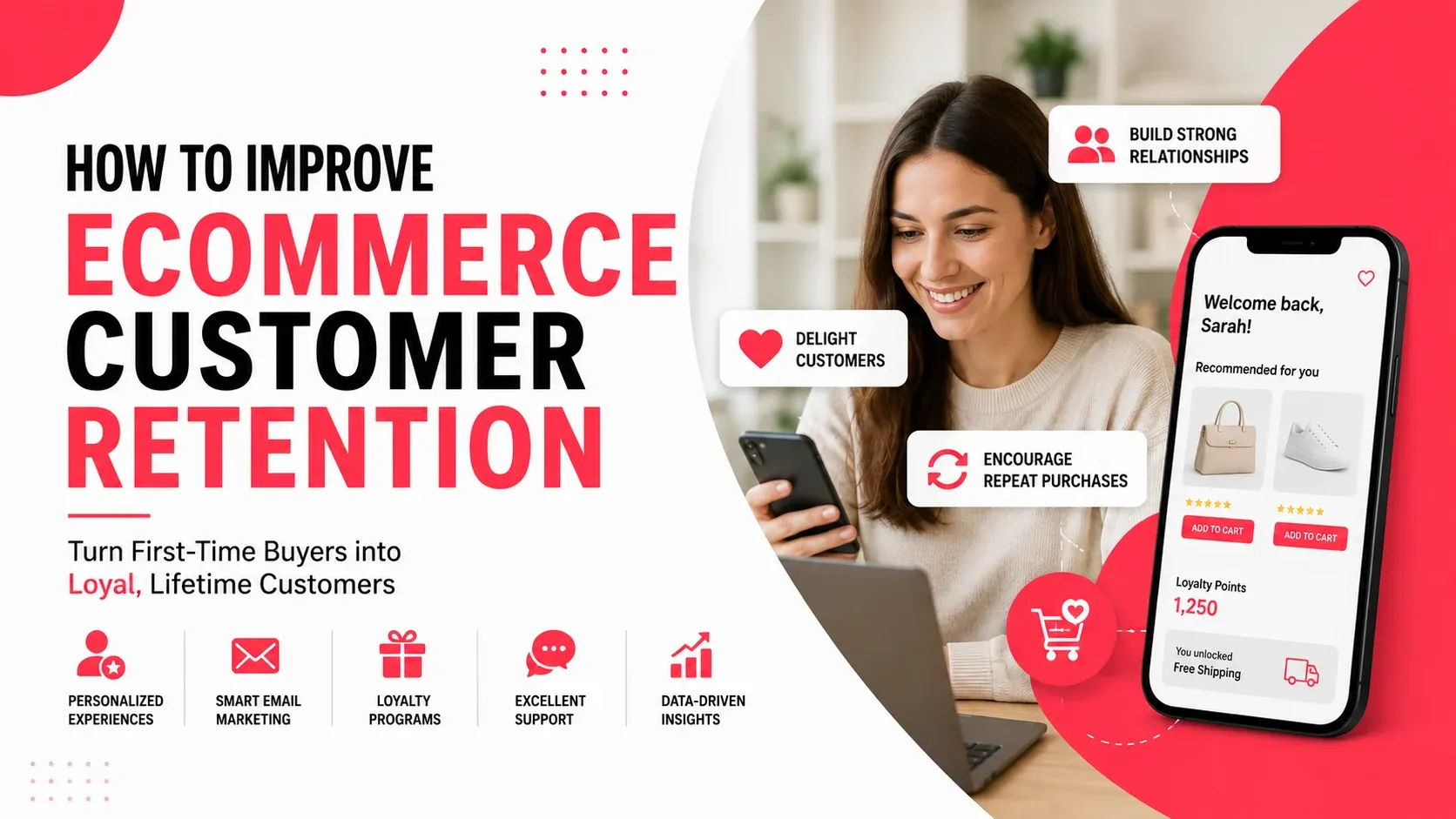
Acquiring new customers is essential for growing an ecommerce business, but long-term success depends just as much on keeping existing customers engaged. While many businesses focus heavily on attracting traffic through SEO, paid advertising, and social media campaigns, they often overlook the value of customer retention.
A customer who has already purchased from your store is more likely to buy again than a first-time visitor. Repeat customers tend to spend more, convert faster, and become valuable advocates who recommend your brand to others.
Improving ecommerce customer retention isn't about a single tactic. It requires creating exceptional customer experiences before, during, and after every purchase.
This guide explores proven strategies that help ecommerce businesses increase repeat purchases, strengthen customer loyalty, and maximize customer lifetime value.
Quick Answer
Ecommerce customer retention improves when businesses focus on delivering outstanding customer experiences throughout the buying journey. Effective strategies include personalization, loyalty programs, email marketing, marketing automation, excellent customer support, fast delivery, simplified returns, and data-driven optimization.
Businesses that prioritize retention often experience:
- Higher customer lifetime value
- Lower customer acquisition costs
- Increased repeat purchases
- Stronger customer loyalty
- More referrals
- Better profitability
Why Customer Retention Matters More Than Ever
Growing an ecommerce business isn't simply about attracting more visitors.
Every new customer requires marketing investment through channels such as:
- Google Ads
- SEO
- Social media
- Influencer campaigns
- Email acquisition
- Content marketing
If customers purchase once and never return, growth becomes increasingly expensive.
Retaining customers helps businesses:
- Increase profitability
- Improve marketing ROI
- Reduce acquisition costs
- Generate predictable revenue
- Build long-term brand loyalty
A strong retention strategy creates sustainable business growth rather than relying solely on continuous customer acquisition.
Understanding Customer Lifetime Value
Customer Lifetime Value (CLV) measures the total revenue a customer generates throughout their relationship with your business.
Increasing CLV is often more profitable than constantly acquiring new customers.
Businesses can improve CLV by:
- Encouraging repeat purchases
- Increasing average order value
- Improving customer satisfaction
- Extending customer relationships
Retention strategies directly contribute to higher lifetime value.
Strategy 1: Deliver an Outstanding First Purchase Experience
Retention begins with the first order.
Customers evaluate every part of the shopping experience, including:
- Website usability
- Product quality
- Checkout process
- Delivery speed
- Packaging
- Communication
- Customer support
A positive first impression significantly increases the likelihood of future purchases.
Businesses planning to improve their online shopping experience can explore e-commerce development services in Dubai to create faster, user-friendly, and conversion-focused ecommerce websites.
Strategy 2: Personalize Every Customer Interaction
Modern shoppers expect personalized experiences.
Personalization can include:
- Product recommendations
- Personalized emails
- Dynamic homepage content
- Customized promotions
- Recently viewed products
- Location-based offers
Customers are more likely to engage with businesses that understand their interests and shopping behavior.
AI-powered personalization can significantly improve customer satisfaction while increasing repeat purchases.
Strategy 3: Build an Effective Email Marketing Strategy
Email remains one of the most effective retention channels because it enables businesses to stay connected after a purchase.
High-performing ecommerce email campaigns include:
Welcome Series
Introduce customers to your brand and products.
Order Confirmation
Provide reassurance while reinforcing professionalism.
Shipping Updates
Keep customers informed throughout the delivery process.
Product Recommendations
Suggest complementary or relevant products.
Review Requests
Encourage customers to share feedback.
Win-Back Campaigns
Reconnect with inactive customers through personalized offers.
Businesses seeking stronger customer communication can also explore email marketing services in Dubai to create automated campaigns that nurture customer relationships.
Strategy 4: Launch a Customer Loyalty Program
Loyalty programs reward customers for continued engagement.
Popular incentives include:
- Reward points
- Exclusive discounts
- Early product access
- Birthday rewards
- VIP memberships
- Referral bonuses
A well-designed loyalty program encourages repeat purchases while strengthening emotional connections with the brand.
Strategy 5: Simplify Returns and Exchanges
Customers feel more confident purchasing when they know returns are straightforward.
A customer-friendly return policy should include:
- Clear instructions
- Transparent timelines
- Simple return requests
- Fast refund processing
Reducing uncertainty helps increase purchase confidence while improving customer satisfaction.
Strategy 6: Use Marketing Automation
Marketing automation allows businesses to communicate consistently without increasing manual workload.
Automation workflows can include:
- Abandoned cart reminders
- Birthday offers
- Reorder reminders
- Loyalty updates
- Product replenishment notifications
- Customer anniversary messages
Automation ensures customers continue hearing from your business at the right moments.
Strategy 7: Deliver Excellent Customer Support
Outstanding customer support builds trust long after the sale.
Customers appreciate businesses that provide:
- Fast responses
- Helpful information
- Multiple contact options
- Friendly communication
- Quick issue resolution
Support quality often influences whether customers purchase again.
Strategy 8: Encourage Customer Reviews
Customer reviews provide valuable social proof.
Businesses should encourage satisfied customers to share:
- Product reviews
- Service experiences
- Photos
- Testimonials
Positive reviews strengthen trust while providing insights that help improve products and services.
Strategy 9: Create Exclusive Experiences
Customers enjoy feeling valued.
Exclusive experiences can include:
- Member-only sales
- Limited product launches
- VIP events
- Early access promotions
- Personalized discounts
Exclusivity increases engagement while rewarding customer loyalty.
Strategy 10: Continuously Improve Using Customer Data
Successful ecommerce businesses constantly analyze customer behavior.
Important metrics include:
Metric | Why It Matters |
|---|---|
Repeat Purchase Rate | Measures customer loyalty |
Customer Lifetime Value | Indicates long-term profitability |
Customer Retention Rate | Tracks ongoing engagement |
Average Order Value | Shows purchasing behavior |
Cart Abandonment Rate | Identifies checkout friction |
Email Open Rate | Measures campaign engagement |
These insights help businesses identify opportunities for continuous improvement.
Common Customer Retention Mistakes
Many ecommerce businesses unintentionally reduce customer loyalty by:
- Ignoring post-purchase communication
- Sending irrelevant promotions
- Delivering inconsistent customer service
- Complicated return processes
- Poor mobile experiences
- Slow websites
- Lack of personalization
- Infrequent customer engagement
Addressing these issues often produces significant improvements in retention.
How AI Is Changing Customer Retention
Artificial intelligence is making retention strategies more intelligent and proactive.
AI helps businesses:
- Predict customer churn
- Recommend products
- Personalize shopping experiences
- Optimize email campaigns
- Segment audiences
- Identify purchasing patterns
Rather than reacting to customer behavior, businesses can anticipate customer needs and engage them more effectively.
Key Takeaways
- Customer retention is often more profitable than customer acquisition.
- First impressions significantly influence repeat purchases.
- Personalization strengthens customer relationships.
- Email marketing remains one of the most effective retention channels.
- Loyalty programs encourage repeat business.
- Excellent customer support builds long-term trust.
- Marketing automation improves engagement at scale.
- Data analytics helps optimize retention strategies.
- AI is transforming customer retention through personalization and predictive insights.
Building Long-Term Customer Loyalty
Successful ecommerce brands recognize that lasting growth comes from more than attracting new visitors. They invest in creating memorable customer experiences that encourage shoppers to return, recommend the brand, and become loyal customers.
Retention strategies work best when they combine outstanding customer service, personalization, automation, and continuous optimization. Businesses that consistently improve every stage of the customer journey often enjoy stronger profitability and more sustainable growth.
For additional insights into automation-driven customer engagement, read our Marketing Automation for Business Growth guide.
Milaaj Brandset helps businesses build ecommerce ecosystems that combine modern website development, intelligent automation, customer experience optimization, and data-driven digital marketing to support long-term business growth.
FAQs
Why is customer retention important in ecommerce?
Customer retention increases repeat purchases, improves customer lifetime value, reduces acquisition costs, and creates more sustainable business growth.
What is a good ecommerce customer retention strategy?
An effective strategy combines personalization, email marketing, loyalty programs, excellent customer support, marketing automation, and continuous customer engagement.
How does email marketing improve customer retention?
Email marketing keeps customers informed, recommends products, promotes special offers, and maintains regular communication after a purchase.
What is Customer Lifetime Value (CLV)?
Customer Lifetime Value measures the total revenue a customer is expected to generate throughout their relationship with your business.
How do loyalty programs increase repeat purchases?
They reward customers for continued engagement through points, discounts, exclusive offers, and member benefits.
Can AI improve ecommerce customer retention?
Yes. AI supports personalization, predictive analytics, automated recommendations, customer segmentation, and churn prediction.
Which metrics should businesses monitor?
Key metrics include retention rate, repeat purchase rate, customer lifetime value, average order value, email engagement, and customer satisfaction.
How often should retention strategies be reviewed?
Businesses should regularly analyze customer behavior and optimize retention strategies based on performance data and customer feedback.
Ready to Elevate Your Brand?
Start Your Project Today