July 25, 2026
Influencer Marketing ROI Explained: How to Measure Campaign Success
Milaaj Editorial / Research Insights
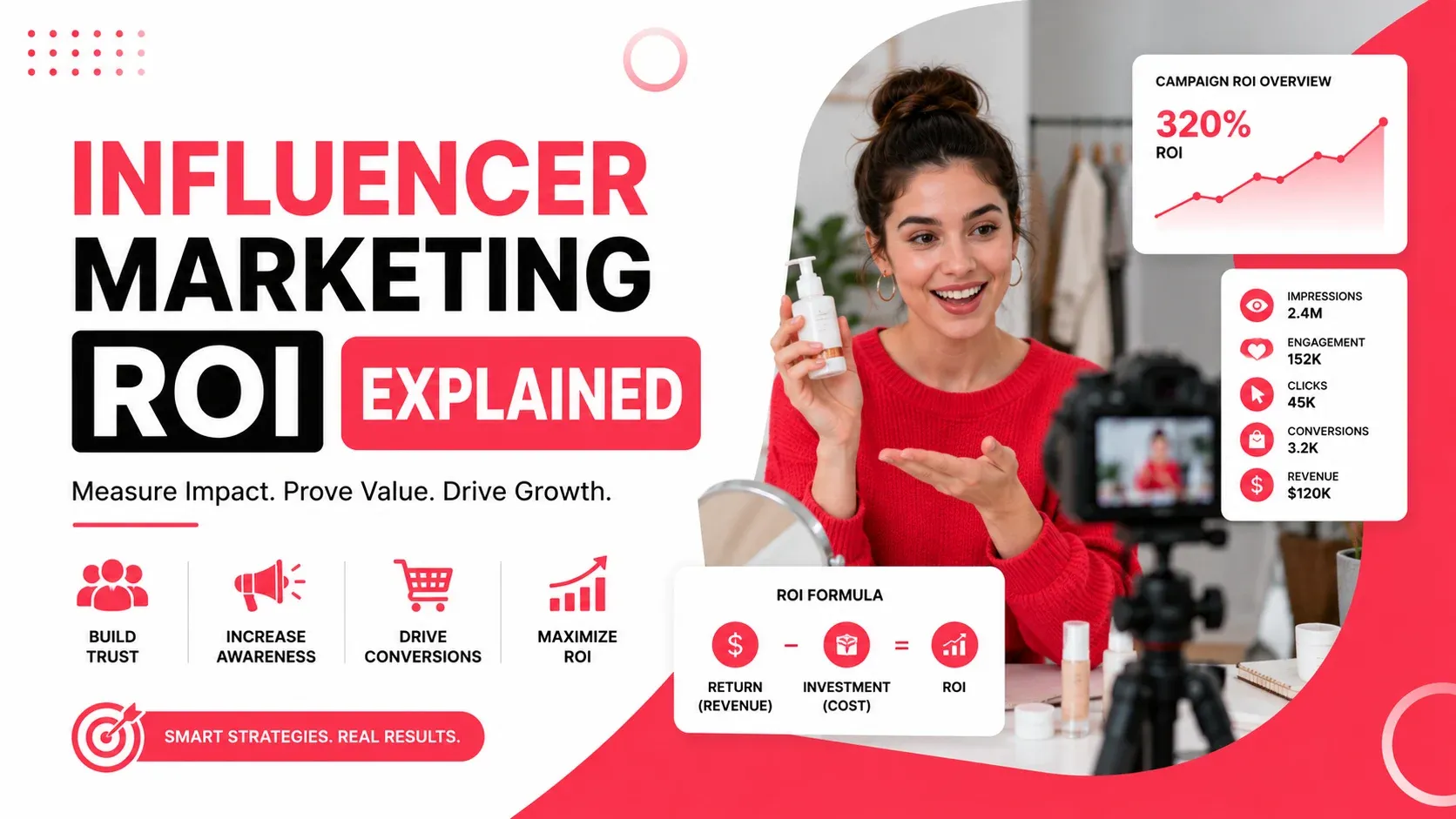
Influencer marketing has become an important part of many digital marketing strategies. Businesses collaborate with creators to increase brand awareness, generate engagement, promote products, and influence purchasing decisions. While these campaigns can deliver significant value, measuring their actual business impact is often more challenging than simply counting likes or followers.
Return on investment (ROI) helps businesses evaluate whether an influencer campaign delivers meaningful results relative to the resources invested. Rather than focusing only on visibility, ROI measures how influencer partnerships contribute to broader marketing objectives such as lead generation, website traffic, customer acquisition, or sales.
This guide explains how businesses can measure influencer marketing ROI using practical metrics, realistic expectations, and data-driven decision-making.
Quick Answer
Influencer marketing ROI measures the value generated from an influencer campaign compared with its total investment. Businesses should evaluate campaign performance using metrics such as engagement, reach, website traffic, conversions, lead quality, and revenue instead of relying solely on follower counts or likes.
What Is Influencer Marketing ROI?
Return on investment (ROI) is a way of determining whether a marketing campaign produces value relative to its cost.
In influencer marketing, value can include:
- Increased brand awareness
- Qualified website traffic
- Lead generation
- Product sales
- Customer acquisition
- Community growth
- Content creation value
Because campaign goals differ, the definition of success should always align with the original business objective.
Why Measuring ROI Matters
Without proper measurement, businesses cannot determine whether an influencer campaign achieved its intended purpose.
ROI measurement helps businesses:
- Allocate marketing budgets more effectively
- Compare influencer partnerships
- Improve future campaign planning
- Identify high-performing content
- Reduce ineffective spending
- Support data-driven marketing decisions
Tracking results consistently allows businesses to optimize influencer collaborations over time rather than relying on assumptions.
Define Campaign Goals Before Launch
Every campaign should begin with clearly defined objectives.
Different goals require different success metrics.
Campaign Goal | Primary KPI |
|---|---|
Brand awareness | Reach and impressions |
Audience engagement | Likes, comments, shares, saves |
Website traffic | Clicks and sessions |
Lead generation | Form submissions |
Product sales | Conversions and revenue |
Community growth | New followers and subscribers |
Establishing measurable objectives before launching a campaign makes ROI evaluation far more meaningful.
Understand the Difference Between Metrics and ROI
Many businesses confuse campaign metrics with return on investment.
Metrics describe campaign performance.
ROI evaluates business value.
For example:
Metrics may include:
- Video views
- Reach
- Engagement
- Click-through rate
- Website visits
ROI considers whether those activities ultimately contributed to measurable business outcomes such as qualified leads, customer acquisition, or revenue growth.
Looking beyond surface-level statistics provides a more accurate picture of campaign effectiveness.
Track the Right Performance Indicators
Different influencer campaigns require different measurement approaches.
Common performance indicators include:
Reach
Reach measures how many unique users saw the influencer's content.
It helps evaluate campaign visibility but doesn't necessarily indicate business impact.
Engagement
Engagement includes:
- Likes
- Comments
- Shares
- Saves
- Video interactions
Strong engagement often indicates that audiences found the content valuable or relevant.
However, engagement should always be interpreted alongside other performance indicators.
Website Traffic
Businesses frequently use influencer campaigns to drive visitors to their websites.
Traffic metrics help answer questions such as:
- How many users visited?
- Which influencer generated the most traffic?
- Which pages attracted the most engagement?
Monitoring website behaviour provides deeper insights than social media engagement alone.
Lead Generation
Some campaigns aim to generate enquiries rather than immediate sales.
Relevant lead generation metrics include:
- Contact form submissions
- Consultation requests
- Newsletter registrations
- Demo bookings
- Download requests
Lead quality is often more important than lead quantity.
Sales and Revenue
When influencer marketing supports direct sales, businesses should track:
- Completed purchases
- Revenue generated
- Conversion rates
- Average order value
- Customer acquisition cost
These metrics provide the clearest picture of financial performance.
Businesses investing in influencer marketing services often combine multiple KPIs instead of relying on a single measurement to evaluate campaign success.
Use Attribution Methods
One of the biggest challenges in influencer marketing is understanding where conversions originate.
Common attribution methods include:
- UTM tracking links
- Promo codes
- Dedicated landing pages
- Affiliate links
- CRM tracking
- Marketing automation platforms
Using multiple attribution methods improves reporting accuracy while helping businesses understand which influencer partnerships generate the greatest value.
Consider Long-Term Value
Not every influencer campaign produces immediate sales.
Some campaigns contribute to:
- Increased brand recognition
- Improved customer trust
- Better search activity
- Future purchasing decisions
- Stronger customer relationships
These longer-term benefits may continue influencing business performance well after a campaign has ended.
If you're evaluating influencer marketing alongside other digital channels, our blog on Best Digital Marketing Channels for Small Businesses explains how different marketing approaches support different business objectives.
Calculate Campaign Costs Accurately
To measure ROI effectively, businesses need a complete understanding of campaign costs.
These may include:
- Influencer partnership fees
- Product samples or gifts
- Content production costs
- Agency management fees
- Paid content amplification
- Creative design resources
- Tracking and reporting tools
Including every campaign expense provides a more accurate picture of overall return rather than evaluating only the influencer's compensation.
Compare Multiple Influencer Campaigns
Reviewing multiple campaigns together helps identify patterns and improve future investments.
Consider comparing:
- Cost per lead
- Cost per acquisition
- Engagement rate
- Conversion rate
- Revenue generated
- Return on investment
- Audience quality
Looking at campaign performance over time helps businesses identify which types of creators, content formats, and messaging consistently produce stronger results.
Evaluate Audience Quality
Large follower counts do not always translate into meaningful business outcomes.
Instead, assess whether an influencer's audience aligns with your target market.
Important considerations include:
- Audience demographics
- Industry relevance
- Geographic location
- Engagement quality
- Comment authenticity
- Content consistency
An influencer with a smaller but highly engaged audience may generate better business results than one with a much larger but less relevant following.
Measure Content Value Beyond Immediate Results
Influencer content often continues delivering value after the initial campaign.
Businesses can extend its usefulness by:
- Repurposing high-performing content.
- Featuring testimonials on their website.
- Including creator videos in email campaigns.
- Using approved content in paid advertising.
- Sharing creator content across their own social media channels.
Factoring in these additional uses helps provide a more complete assessment of campaign value beyond direct conversions.
Businesses working with creator partnership management often incorporate content licensing and reuse into their overall ROI calculations because these assets continue generating marketing value long after the original campaign ends.
Common Mistakes When Measuring Influencer ROI
Many businesses struggle to evaluate influencer campaigns because they focus on incomplete or misleading metrics.
Mistake | Better Approach |
|---|---|
Judging success only by follower count | Evaluate audience relevance and engagement quality |
Measuring likes without business outcomes | Track conversions, leads, and revenue alongside engagement |
Ignoring campaign costs | Include all direct and indirect campaign expenses |
Using a single performance metric | Measure multiple KPIs aligned with campaign goals |
Expecting immediate sales from every campaign | Consider long-term brand awareness and customer relationships |
Failing to use attribution tools | Implement tracking links, promo codes, and analytics before launch |
Avoiding these mistakes helps create more accurate reporting while improving future campaign decisions.
Integrate Influencer Marketing Into Your Overall Strategy
Influencer marketing delivers stronger results when it complements your broader digital marketing activities.
For example, businesses can:
- Promote educational blog content through trusted creators.
- Support product launches with influencer reviews.
- Increase webinar registrations.
- Drive traffic to dedicated landing pages.
- Strengthen brand credibility through authentic customer experiences.
Integrating influencer campaigns with content marketing, paid advertising, email marketing, and website optimization creates a more consistent customer journey while making campaign performance easier to measure.
If you're creating social media campaigns designed to encourage audience engagement and sharing, our guide on How to Create Viral Social Media Content explains the principles behind content that naturally attracts interaction across multiple platforms.
Key Takeaways
- Influencer marketing ROI measures business value rather than social media popularity.
- Campaign goals should determine which KPIs matter most.
- Engagement, traffic, leads, and revenue provide a more complete picture than follower count alone.
- Attribution tools improve measurement accuracy.
- Long-term brand value should be considered alongside immediate campaign results.
- Regular campaign analysis helps optimize future influencer partnerships.
Measure What Truly Matters
Influencer marketing is most effective when success is evaluated through meaningful business outcomes instead of vanity metrics. While reach and engagement provide useful insights, they should be viewed alongside website traffic, lead generation, conversions, customer acquisition, and long-term brand growth.
By defining clear objectives, implementing reliable attribution methods, and reviewing performance consistently, businesses can make better investment decisions and build stronger creator partnerships that contribute to sustainable marketing success.
Milaaj Brandset helps businesses develop data-driven influencer marketing strategies that combine authentic creator collaborations with measurable performance tracking and long-term business growth.
FAQs
What is influencer marketing ROI?
Influencer marketing ROI measures the value generated by an influencer campaign compared with the total investment made in that campaign. Value may include brand awareness, website traffic, leads, sales, or customer acquisition depending on campaign objectives.
How do businesses measure influencer marketing ROI?
Businesses typically evaluate metrics such as engagement, website traffic, conversions, revenue, lead generation, customer acquisition, and campaign costs while using attribution tools like tracking links and promotional codes.
Are engagement metrics enough to measure campaign success?
No. Engagement indicates audience interaction, but it does not necessarily reflect business outcomes. It should be considered alongside metrics such as qualified leads, conversions, and revenue.
Why is audience quality more important than follower count?
An influencer with a highly relevant and engaged audience is often more effective at generating qualified leads or sales than someone with a much larger but less targeted following.
What attribution methods improve ROI measurement?
Common attribution methods include UTM parameters, affiliate links, dedicated landing pages, discount codes, CRM tracking, and marketing automation platforms.
Should businesses consider long-term value when calculating ROI?
Yes. Influencer campaigns can continue generating value through increased brand recognition, reusable content, improved customer trust, and future purchasing decisions, even after the campaign has ended.
Ready to Elevate Your Brand?
Start Your Project Today