July 30, 2026
18 Lead Magnet Ideas for Service Businesses to Generate More Qualified Leads
Milaaj Editorial / Research Insights
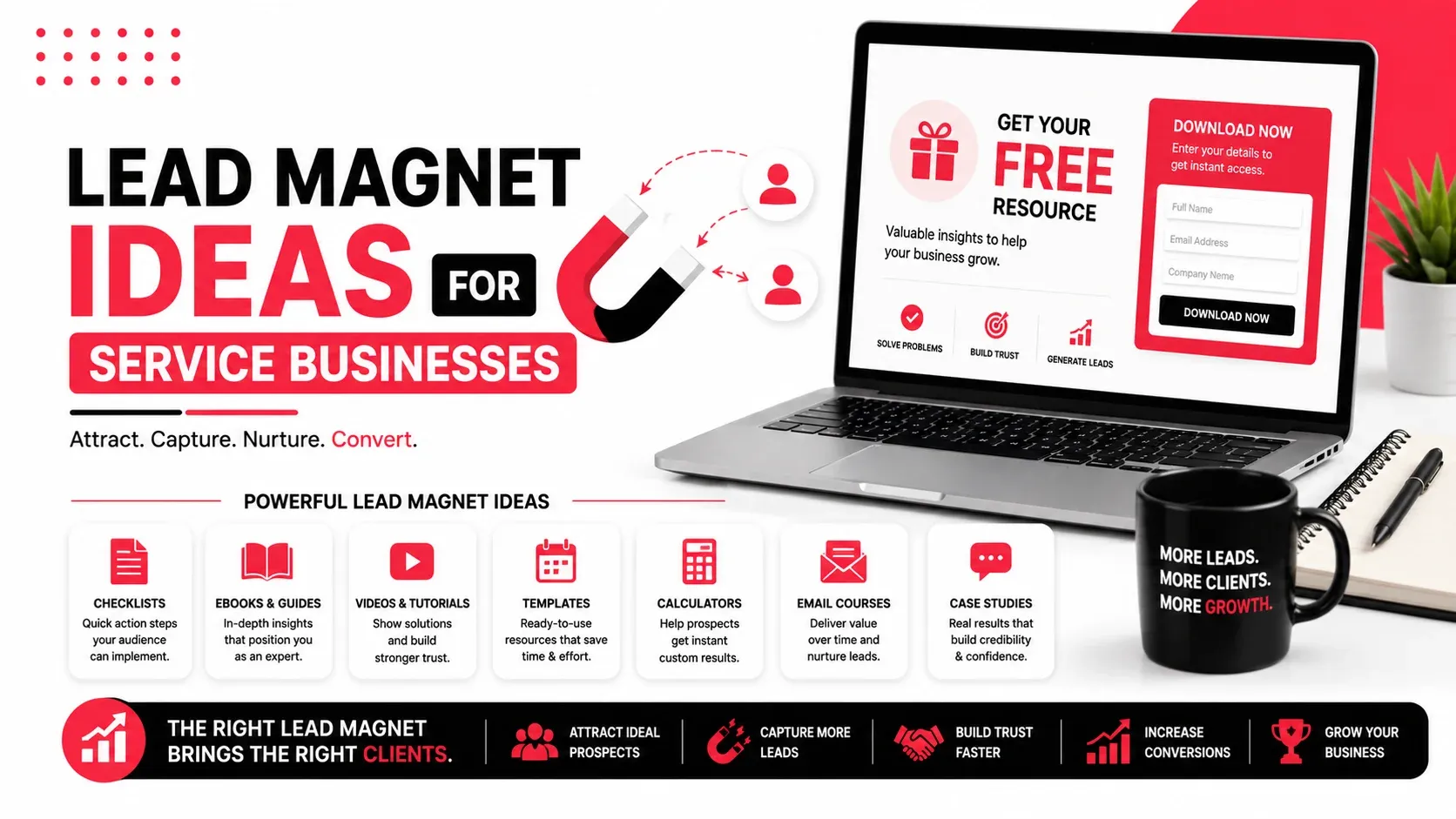
Generating website traffic is only one part of building a successful service business. The real challenge is turning anonymous visitors into qualified leads who are interested in your services. Since many prospects are not ready to make an immediate purchase, businesses need a way to provide value first while building trust over time.
This is where lead magnets become one of the most effective lead generation tools. By offering valuable resources in exchange for contact information, service businesses can start meaningful conversations with potential clients while creating opportunities for future nurturing and conversions.
Whether you run a marketing agency, legal practice, consultancy, healthcare clinic, IT company, educational institution, or home service business, the right lead magnet can significantly improve your lead generation efforts.
This guide explores practical lead magnet ideas that help service businesses attract qualified prospects, build credibility, and increase enquiries.
Quick Answer
The best lead magnets solve a specific problem for your target audience while requiring minimal effort to consume. Resources such as guides, checklists, templates, assessments, calculators, webinars, and free consultations help service businesses attract qualified leads who are more likely to become future customers.
What Is a Lead Magnet?
A lead magnet is a valuable resource offered free of charge in exchange for a visitor's contact information, usually an email address.
Unlike general website content, a lead magnet focuses on solving one specific problem or answering an important question.
Examples include:
- Downloadable guides
- Checklists
- Templates
- Industry reports
- Free tools
- Webinars
- Email courses
- Assessments
The objective is not simply collecting email addresses but attracting people who genuinely match your ideal customer profile.
Why Service Businesses Need Lead Magnets
Unlike ecommerce businesses, service providers often have longer buying cycles.
Potential clients usually:
- Research multiple providers.
- Compare pricing.
- Evaluate expertise.
- Read reviews.
- Seek recommendations.
- Ask questions before making contact.
Lead magnets help businesses stay connected with these prospects while demonstrating expertise long before a sales conversation begins.
Benefits include:
- Higher-quality leads
- Increased website conversions
- Stronger brand authority
- Better customer relationships
- More qualified consultations
- Lower customer acquisition costs
What Makes a High-Converting Lead Magnet?
Not every free resource generates qualified leads.
The best lead magnets share several characteristics.
They should be:
- Highly relevant to your services
- Easy to understand
- Quick to consume
- Immediately useful
- Focused on solving one problem
- Professionally designed
- Actionable rather than theoretical
Visitors should feel they have received genuine value before becoming a customer.
Match Your Lead Magnet to Customer Intent
Different prospects have different needs depending on where they are in the buying journey.
Customer Stage | Effective Lead Magnet |
|---|---|
Awareness | Educational guide or checklist |
Consideration | Case study or comparison guide |
Evaluation | Free consultation or assessment |
Decision | Audit, strategy session, or proposal template |
Matching the lead magnet to customer intent increases the likelihood of attracting qualified leads rather than casual visitors.
1. Industry Guides
Comprehensive guides remain one of the most effective lead magnets for service businesses.
Examples include:
- Beginner's guides
- Ultimate resource guides
- Industry trend reports
- Best practices
- Step-by-step roadmaps
Educational guides establish expertise while helping potential clients better understand their challenges.
2. Practical Checklists
Checklists provide immediate value because they simplify complex processes.
Examples:
- SEO audit checklist
- Website launch checklist
- Business compliance checklist
- Cybersecurity checklist
- Recruitment checklist
- Property buying checklist
Because they are quick to use, checklists often generate high download rates.
3. Ready-to-Use Templates
Templates save users significant time.
Popular options include:
- Marketing plans
- Business proposals
- Budget templates
- Social media calendars
- Content planning sheets
- Client onboarding documents
Templates are especially effective for B2B service providers.
4. Free Assessments
Interactive assessments encourage engagement while helping businesses qualify leads.
Examples include:
- Website performance assessment
- Digital marketing scorecard
- Financial health assessment
- Brand evaluation
- IT security assessment
- Business growth assessment
Assessment results can naturally lead into consultations or service recommendations.
5. Free Audits
Audits demonstrate expertise using the prospect's own business as the example.
Examples include:
- SEO audit
- Website audit
- PPC campaign audit
- Social media audit
- UX review
- Brand consistency audit
Free audits work particularly well for agencies and consultants because they provide personalized value before discussing paid services.
Businesses offering digital marketing services often use free website or SEO audits to begin conversations with businesses looking to improve their online performance.
6. Cost Calculators
Interactive calculators help prospects estimate costs, savings, or potential returns.
Examples include:
- Marketing budget calculator
- Website cost estimator
- ROI calculator
- Loan calculator
- Tax estimator
- Project pricing calculator
These tools generate highly qualified leads because users are already evaluating purchasing decisions.
7. Email Mini Courses
Instead of delivering one downloadable resource, businesses can create short educational email courses.
For example:
- Five-day marketing fundamentals
- Seven-day productivity improvement course
- Email writing masterclass
- Beginner's investment lessons
Breaking information into smaller lessons increases ongoing engagement while introducing subscribers to your expertise.
8. Exclusive Webinars
Live and recorded webinars allow businesses to demonstrate expertise while interacting directly with potential clients.
Topics may include:
- Industry trends
- Frequently asked questions
- Live demonstrations
- Expert interviews
- Practical workshops
Webinars also create opportunities for live question-and-answer sessions that strengthen trust and credibility.
9. Resource Libraries
Instead of offering one download, businesses can create an exclusive resource hub containing multiple assets.
A resource library might include:
- Guides
- Templates
- Videos
- Worksheets
- Case studies
- Industry reports
Adding new resources over time encourages repeat visits and long-term engagement.
10. Case Study Collections
Real-world success stories help prospects understand how your services solve practical business challenges.
Include:
- The client's objective
- The approach taken
- Key challenges
- Results achieved
- Lessons learned
Rather than simply promoting your services, case studies provide evidence that supports your expertise.
For a deeper understanding of how educational content attracts and nurtures potential customers throughout the buying journey, read our guide on Content Marketing Funnel Strategy for UAE Brands.
11. Industry Reports and Research
Original research and data-driven reports position your business as a trusted authority.
Examples include:
- Annual industry reports
- Customer behaviour studies
- Market trend analysis
- Salary reports
- Local business insights
- Technology adoption reports
Unique data is highly valuable because it cannot be found elsewhere, making it an excellent incentive for prospects to share their contact information.
12. Toolkits
A toolkit combines several useful resources into one downloadable package.
For example, a digital marketing toolkit could include:
- Planning templates
- Campaign checklists
- Content calendars
- KPI tracking sheets
- Strategy worksheets
Offering multiple practical resources increases the perceived value of your lead magnet.
13. Free Strategy Sessions
Many service businesses convert qualified prospects by offering a limited free consultation.
Examples include:
- Marketing strategy consultation
- Financial planning session
- Website review
- HR consultation
- Business growth discussion
Keep the session focused on solving a specific challenge rather than delivering a sales presentation.
14. Frequently Asked Question Guides
Prospects often delay contacting a business because they have unanswered questions.
Create downloadable guides covering topics such as:
- Pricing expectations
- Project timelines
- Service processes
- Common misconceptions
- Preparation checklists
Answering these questions early helps reduce uncertainty and encourages enquiries.
15. Industry Glossaries
Many industries use terminology that may confuse new prospects.
Glossaries explaining important concepts are useful for sectors such as:
- Digital marketing
- Legal services
- Healthcare
- Finance
- Technology
- Construction
Simple educational resources often perform well because they remove barriers to understanding.
16. Video Tutorials
Some audiences prefer visual learning over downloadable documents.
Examples include:
- Product walkthroughs
- Service demonstrations
- Quick how-to videos
- Training sessions
- Software tutorials
Hosting gated video lessons can generate qualified leads while demonstrating your expertise.
17. Interactive Quizzes
Quizzes encourage participation while helping visitors learn more about their needs.
Examples include:
- Is Your Website Losing Leads?
- How Strong Is Your Brand?
- Is Your Business SEO Ready?
- What's Your Marketing Maturity Score?
Provide personalized results with practical recommendations to increase the perceived value of the experience.
18. Free Planning Worksheets
Worksheets help prospects organize their ideas before making a purchasing decision.
Examples include:
- Marketing planning worksheets
- Business goal planners
- Budget planning sheets
- Project requirement documents
- Website planning templates
These resources are particularly effective for businesses offering professional consulting or project-based services.
Build Landing Pages That Convert
A valuable lead magnet requires an equally effective landing page.
Your landing page should include:
- A benefit-focused headline
- A clear explanation of the resource
- Bullet points highlighting what users will learn
- A simple lead capture form
- Social proof where appropriate
- One prominent call to action
Avoid unnecessary navigation or multiple competing offers that distract visitors from completing the form.
Promote Your Lead Magnets
Creating a lead magnet is only the first step. To generate consistent leads, you need a promotion strategy.
Effective promotion channels include:
- Organic search
- Blog articles
- Social media platforms
- Paid advertising
- Email newsletters
- Webinar registrations
- Resource pages
- Strategic partnerships
Sharing lead magnets across multiple channels increases visibility and attracts prospects from different sources.
If your landing page is attracting traffic but not generating enough enquiries, explore our blog on How UX Design Impacts Lead Generation to learn how user experience improvements can increase form submissions and overall conversion rates.
Measure Lead Magnet Performance
Tracking performance helps identify which resources generate the highest-quality leads.
Monitor metrics such as:
Metric | Why It Matters |
|---|---|
Landing Page Conversion Rate | Measures how effectively visitors become leads |
Cost Per Lead | Evaluates acquisition efficiency |
Download Rate | Indicates resource appeal |
Form Completion Rate | Identifies friction during sign-up |
Lead-to-Customer Conversion Rate | Measures lead quality |
Engagement Rate | Shows how prospects interact with the resource |
Focus on lead quality rather than download volume alone. A smaller number of highly qualified leads often delivers greater long-term business value than a large number of unqualified contacts.
Common Lead Magnet Mistakes
Many lead magnets fail because they provide too little value or target the wrong audience.
Mistake | Better Approach |
|---|---|
Covering too many topics | Solve one specific problem thoroughly |
Creating overly generic resources | Address a clearly defined audience and challenge |
Asking for excessive information | Keep lead capture forms short and simple |
Using weak landing pages | Focus on one offer with a clear call to action |
Never updating resources | Refresh content regularly with current insights |
Measuring downloads only | Track lead quality and business outcomes |
Avoiding these mistakes helps improve both conversion rates and the quality of leads entering your sales pipeline.
Key Takeaways
- Lead magnets help service businesses convert anonymous visitors into qualified prospects.
- The best lead magnets solve one specific problem and deliver immediate value.
- Match each lead magnet to the customer's stage in the buying journey.
- Guides, templates, assessments, calculators, webinars, and audits are among the highest-performing formats.
- High-converting landing pages and effective promotion are just as important as the resource itself.
- Measure lead quality, not just download numbers, to evaluate success.
Turn Valuable Content Into Qualified Leads
A well-designed lead magnet is more than a free download—it is the beginning of a relationship with a potential client. By providing practical, relevant, and actionable resources, service businesses can demonstrate expertise, build trust, and encourage prospects to take the next step with confidence.
Instead of creating resources simply to grow an email list, focus on solving genuine customer problems. Lead magnets that address real challenges attract more qualified leads, improve conversion rates, and create stronger opportunities for long-term business growth.
Milaaj Brandset helps businesses develop strategic lead generation campaigns that combine compelling content, high-converting landing pages, and data-driven digital marketing strategies to attract qualified prospects and support sustainable growth.
FAQs
What is a lead magnet?
A lead magnet is a valuable resource offered in exchange for a visitor's contact information. Common examples include guides, checklists, templates, webinars, assessments, and free consultations.
Which lead magnets work best for service businesses?
Guides, checklists, templates, free audits, assessments, calculators, webinars, and strategy sessions are among the most effective because they showcase expertise while solving specific customer problems.
Should every service business have multiple lead magnets?
Yes. Different customer segments and buying stages often require different resources. Creating multiple lead magnets helps attract a wider range of qualified prospects.
How long should a lead magnet be?
Quality matters more than length. A concise checklist may outperform a lengthy guide if it delivers immediate value and solves a clear problem.
How can I promote my lead magnet?
Promote lead magnets through SEO, blog content, social media, paid advertising, email newsletters, webinars, partnerships, and dedicated landing pages to reach your target audience.
How do I know if my lead magnet is successful?
Evaluate landing page conversion rates, lead quality, cost per lead, form completion rates, engagement, and lead-to-customer conversion rates rather than focusing only on the number of downloads.
Ready to Elevate Your Brand?
Start Your Project Today