July 1, 2026
Omnichannel Marketing Strategy for Modern Businesses: How to Create Seamless Customer Experiences
Milaaj Editorial / Research Insights
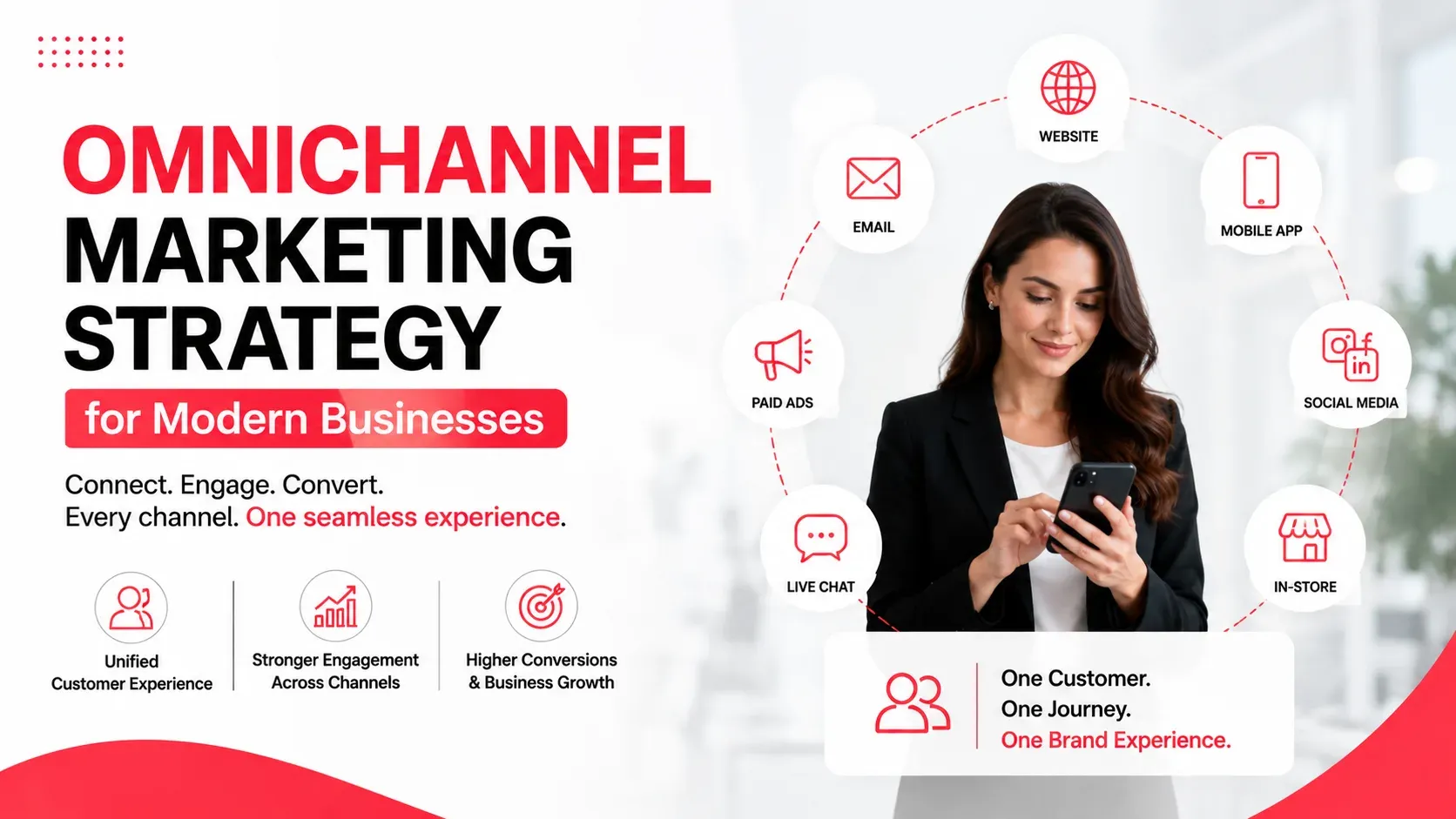
Customers no longer interact with businesses through a single channel. A potential buyer may discover your brand on social media, visit your website from a Google search, subscribe to your email newsletter, compare reviews, contact your support team, and finally complete a purchase using a mobile device. Every one of these interactions influences their purchasing decision.
For businesses, this shift has made omnichannel marketing more important than ever. Rather than treating each platform as an isolated marketing channel, omnichannel marketing connects every customer touchpoint into one consistent experience. This approach not only improves customer satisfaction but also increases conversions, customer retention, and lifetime value.
As digital competition continues to grow across industries, businesses that provide seamless experiences across websites, mobile apps, email, social media, paid advertising, and customer support are more likely to build stronger relationships with customers.
This guide explains what omnichannel marketing is, why it matters, and how businesses can implement an effective strategy that drives measurable business growth.
Quick Answer
An omnichannel marketing strategy creates a unified customer experience across every online and offline touchpoint. Instead of treating marketing channels separately, businesses connect customer data, messaging, branding, and communication to deliver consistent experiences throughout the customer journey.
An effective omnichannel strategy helps businesses:
- Improve customer experience
- Increase customer engagement
- Boost conversion rates
- Strengthen customer loyalty
- Reduce customer acquisition costs
- Increase customer lifetime value
- Improve marketing performance
What Is Omnichannel Marketing?
Omnichannel marketing is the practice of integrating multiple communication and sales channels into one connected customer experience.
These channels may include:
- Business websites
- Ecommerce stores
- Mobile applications
- Social media platforms
- Search engines
- Email marketing
- SMS campaigns
- Paid advertising
- Customer support
- Physical stores
The objective is to ensure customers receive a consistent experience regardless of where they interact with your business.
Omnichannel vs Multichannel Marketing
Although the terms are often used interchangeably, they represent different approaches.
Feature | Omnichannel Marketing | Multichannel Marketing |
|---|---|---|
Customer Experience | Fully connected across channels | Separate experiences for each channel |
Customer Data | Shared across platforms | Often isolated |
Messaging | Consistent and personalized | Can vary between channels |
Customer Journey | Continuous across touchpoints | Individual channel journeys |
Goal | Unified customer experience | Presence on multiple platforms |
Simply being present on multiple channels does not create an omnichannel experience.
Why Omnichannel Marketing Matters
Today's customers expect convenience.
They may begin researching on one device and complete a purchase on another. They expect businesses to remember their preferences and provide consistent communication regardless of the platform.
Businesses with strong omnichannel strategies often experience:
- Higher customer satisfaction
- Better customer retention
- Increased repeat purchases
- More qualified leads
- Greater customer trust
- Higher marketing ROI
The more connected the experience, the easier it becomes for customers to interact with your brand.
Understand the Customer Journey
Before implementing an omnichannel strategy, businesses should map the complete customer journey.
Typical stages include:
Awareness
Customers discover your business through search engines, advertisements, or social media.
Consideration
They compare products, read reviews, and evaluate alternatives.
Decision
Customers request information, contact sales teams, or complete purchases.
Retention
Businesses continue engagement through email, customer support, and loyalty initiatives.
Advocacy
Satisfied customers leave reviews, refer others, and become long-term brand advocates.
Understanding these stages helps identify opportunities to improve customer experiences.
Create Consistent Brand Messaging
Consistency is one of the biggest advantages of omnichannel marketing.
Customers should experience the same:
- Brand voice
- Visual identity
- Value proposition
- Offers
- Customer service quality
Whether someone visits your website, sees a social media advertisement, or receives an email campaign, the overall experience should feel familiar.
Connect Customer Data Across Platforms
Disconnected customer information often results in inconsistent experiences.
Businesses should integrate customer data from:
- CRM systems
- Ecommerce platforms
- Marketing automation software
- Email platforms
- Advertising campaigns
- Website analytics
A unified customer profile enables personalized communication throughout the buying journey.
Businesses seeking intelligent customer data integration can explore AI Automation Services in Dubai to automate workflows and improve customer experiences across multiple platforms.
Build a High-Performing Website
Your website serves as the central hub of an omnichannel strategy.
An effective business website should include:
- Responsive design
- Fast loading speed
- Clear navigation
- Conversion-focused landing pages
- Consistent branding
- Simple contact options
A high-performing website strengthens every other marketing channel.
Businesses looking to improve digital performance can explore Web Development Services in Dubai to build scalable, user-friendly websites that support omnichannel marketing.
Use Marketing Automation
Marketing automation helps businesses deliver consistent communication at scale.
Examples include:
- Welcome emails
- Lead nurturing sequences
- Abandoned cart reminders
- Customer onboarding
- Re-engagement campaigns
- Appointment reminders
Automation ensures customers receive relevant communication based on their behavior rather than generic mass messaging.
Personalize Customer Experiences
Personalization significantly improves customer engagement.
Businesses can personalize:
- Product recommendations
- Website content
- Email campaigns
- Advertising
- Promotional offers
- Customer support
Using customer behavior and purchase history allows businesses to deliver more relevant experiences.
Integrate Social Media Into the Customer Journey
Social media should not operate independently from other marketing efforts.
Businesses should connect social platforms with:
- Website landing pages
- CRM systems
- Email campaigns
- Customer support
- Ecommerce stores
This creates smoother transitions as customers move between channels.
Align Sales and Marketing Teams
An effective omnichannel strategy requires collaboration.
Marketing teams generate interest while sales teams convert opportunities.
Shared goals should include:
- Lead quality
- Customer satisfaction
- Conversion rates
- Customer retention
- Revenue growth
When both teams share customer insights, businesses create more consistent experiences.
Measure Omnichannel Performance
Success should be measured across the entire customer journey.
Important KPIs include:
KPI | Why It Matters |
|---|---|
Customer Acquisition Cost | Measures marketing efficiency |
Conversion Rate | Evaluates campaign effectiveness |
Customer Lifetime Value | Indicates long-term profitability |
Customer Retention Rate | Measures loyalty |
Engagement Rate | Shows interaction across channels |
Revenue Per Customer | Evaluates business growth |
Tracking these metrics helps identify opportunities for continuous improvement.
Common Omnichannel Marketing Mistakes
Businesses often struggle because they:
- Treat channels independently
- Use inconsistent messaging
- Ignore customer data
- Fail to personalize communication
- Neglect mobile experiences
- Underutilize automation
- Measure channels individually instead of collectively
Avoiding these mistakes creates more seamless customer journeys.
Future Trends in Omnichannel Marketing
Omnichannel marketing continues to evolve with new technologies.
Emerging trends include:
- AI-powered personalization
- Predictive customer analytics
- Conversational AI
- Voice search integration
- Unified commerce platforms
- First-party data strategies
- Hyper-personalized customer journeys
Businesses that invest in these technologies will be better equipped to meet changing customer expectations.
Key Takeaways
- Omnichannel marketing connects every customer touchpoint into one seamless experience.
- Consistent branding builds trust across channels.
- Customer journey mapping identifies opportunities for improvement.
- Shared customer data enables better personalization.
- Marketing automation improves communication efficiency.
- Websites serve as the foundation of omnichannel strategies.
- Sales and marketing alignment improves business performance.
- Continuous analytics support ongoing optimization.
- AI is making omnichannel experiences increasingly personalized.
Bringing Every Customer Interaction Together
Modern customers expect businesses to recognize them regardless of where they interact. Whether someone visits your website, engages with a social media campaign, opens an email, or contacts your support team, every experience should feel connected and consistent.
An effective omnichannel strategy isn't about being present on every platform—it's about ensuring every platform works together to create a frictionless customer journey. Businesses that prioritize integration, personalization, and customer experience are better positioned to improve conversions, increase loyalty, and achieve sustainable growth.
For businesses looking to strengthen automated customer journeys and lifecycle marketing, read our Marketing Automation for Business Growth guide.
Milaaj Brandset helps businesses build integrated digital ecosystems through web development, automation, SEO, and digital marketing strategies that create seamless customer experiences and long-term business growth.
FAQs
What is omnichannel marketing?
Omnichannel marketing is a strategy that connects all customer touchpoints to create a consistent and seamless experience across online and offline channels.
How is omnichannel marketing different from multichannel marketing?
Multichannel marketing uses multiple platforms independently, while omnichannel marketing integrates them into one unified customer journey.
Why is omnichannel marketing important?
It improves customer experience, strengthens brand consistency, increases customer retention, and supports higher conversion rates.
Which channels should businesses include?
Common channels include websites, mobile apps, social media, email marketing, paid advertising, CRM systems, ecommerce platforms, and customer support.
How does personalization improve omnichannel marketing?
Personalization delivers relevant content and offers based on customer behavior, improving engagement and customer satisfaction.
Is marketing automation necessary?
Yes. Automation enables businesses to communicate consistently across multiple touchpoints while reducing manual work.
What metrics should businesses monitor?
Key metrics include customer acquisition cost, conversion rate, customer lifetime value, retention rate, engagement, and revenue per customer.
Can small businesses implement omnichannel marketing?
Yes. Even smaller businesses can create connected customer experiences by integrating their website, CRM, email marketing, and social media channels.
Ready to Elevate Your Brand?
Start Your Project Today