June 30, 2026
SaaS Marketing Strategies for UAE Startups: How to Acquire, Convert, & Retain Customers
Milaaj Editorial / Research Insights
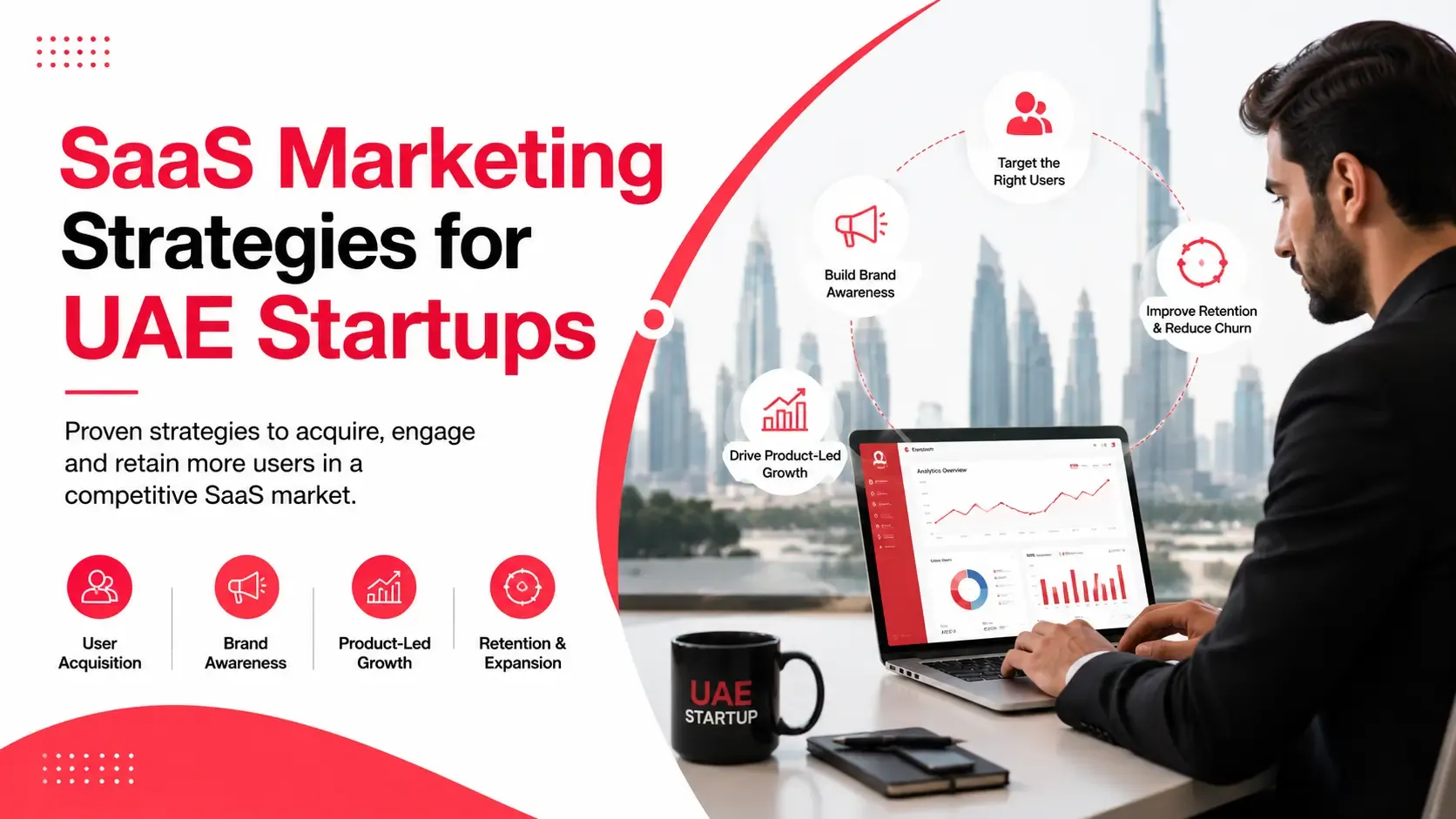
Launching a Software-as-a-Service (SaaS) product is only the first milestone. The real challenge begins when startups need to consistently acquire users, convert free trials into paying customers, and retain subscribers in an increasingly competitive market.
The UAE has become one of the Middle East's fastest-growing technology hubs, supported by government initiatives, digital transformation, startup accelerators, and increasing investment in innovation. This presents significant opportunities for SaaS companies targeting businesses and consumers across the region.
However, SaaS marketing differs from traditional digital marketing. Instead of generating one-time sales, SaaS businesses focus on recurring revenue, customer lifetime value, product adoption, and long-term retention. Every marketing decision should contribute to sustainable subscription growth.
This guide explores practical SaaS marketing strategies that help UAE startups attract qualified users, improve conversions, reduce churn, and build scalable recurring revenue.
Quick Answer
Successful SaaS marketing combines product education, SEO, content marketing, performance advertising, product-led growth, email automation, customer onboarding, and data-driven optimization.
The most effective SaaS businesses focus on:
- Solving a clearly defined problem
- Attracting high-intent users
- Reducing customer acquisition costs
- Improving trial-to-paid conversions
- Increasing customer lifetime value
- Minimizing churn
- Continuously optimizing the user journey
A balanced strategy across acquisition, activation, retention, and expansion creates sustainable growth.
Why SaaS Marketing Is Different
Unlike ecommerce or traditional service businesses, SaaS companies generate recurring monthly or annual subscriptions.
Marketing success isn't measured only by sign-ups.
Instead, startups monitor metrics such as:
- Monthly Recurring Revenue (MRR)
- Annual Recurring Revenue (ARR)
- Customer Acquisition Cost (CAC)
- Customer Lifetime Value (CLV)
- Churn Rate
- Product Adoption
- Expansion Revenue
Every marketing activity should contribute to improving these long-term business metrics.
Start With a Clearly Defined Ideal Customer Profile
Many startups try to market to everyone.
Successful SaaS companies identify a specific audience before launching campaigns.
Consider factors such as:
- Industry
- Business size
- Company revenue
- Decision-makers
- Pain points
- Budget
- Current software usage
The more precisely your audience is defined, the more effective your messaging becomes.
Strategy 1: Build a Product-Led Growth (PLG) Experience
Modern SaaS businesses increasingly rely on Product-Led Growth (PLG), where the product itself becomes the primary driver of customer acquisition.
Examples include:
- Free trials
- Freemium plans
- Interactive demos
- Self-service onboarding
- Guided product tours
Reducing friction allows potential customers to experience value before making a purchase decision.
Strategy 2: Invest in SEO for Long-Term Growth
Organic search remains one of the most cost-effective acquisition channels for SaaS businesses.
Potential customers actively search for:
- Software comparisons
- Problem-solving guides
- Industry solutions
- Product alternatives
- Best software lists
Publishing educational content targeting these searches builds authority while generating qualified traffic.
Businesses looking to strengthen their organic visibility can explore SEO Services in Dubai to develop scalable search strategies.
Strategy 3: Create Educational Content
SaaS buyers conduct extensive research before purchasing software.
Helpful content builds trust while supporting every stage of the buying journey.
Effective content formats include:
- Blog articles
- Buying guides
- Comparison pages
- Case studies
- Video tutorials
- Webinars
- Product documentation
Educational content positions your business as a trusted industry resource rather than simply another software vendor.
Strategy 4: Use Performance Marketing Strategically
Paid advertising accelerates growth when targeting high-intent users.
Effective channels include:
- Google Search Ads
- LinkedIn Ads
- Meta Ads
- YouTube Ads
- Display Remarketing
Campaigns should focus on solving customer problems instead of promoting product features alone.
Performance marketing works best when paired with optimized landing pages and strong conversion tracking.
Strategy 5: Optimize Landing Pages for Conversions
Every campaign should direct users to a dedicated landing page rather than a generic homepage.
High-converting landing pages include:
- Clear value propositions
- Product screenshots
- Customer testimonials
- Pricing transparency
- Feature highlights
- Strong calls-to-action
- Frequently asked questions
Reducing distractions improves conversion rates.
Strategy 6: Build an Automated Email Funnel
Email remains one of the highest-performing SaaS marketing channels.
Automated sequences can nurture prospects through every stage.
Typical workflows include:
- Welcome emails
- Trial onboarding
- Feature education
- Customer success tips
- Upgrade reminders
- Renewal notifications
- Re-engagement campaigns
Automation ensures consistent communication without increasing manual workload.
Businesses interested in intelligent customer engagement can also explore AI Automation Services in Dubai to streamline marketing and customer lifecycle automation.
Strategy 7: Prioritize Customer Onboarding
Many SaaS companies lose users during the first few days after sign-up.
Successful onboarding should help users achieve their first meaningful outcome as quickly as possible.
Effective onboarding includes:
- Guided product tours
- Interactive checklists
- Progress tracking
- Educational videos
- Contextual tips
- Personalized recommendations
Helping users experience early success increases trial-to-paid conversions and long-term retention.
Strategy 8: Reduce Customer Churn
Acquiring customers is expensive.
Keeping existing customers is significantly more profitable.
Common churn reduction strategies include:
- Regular feature updates
- Proactive customer support
- Personalized communication
- Success check-ins
- Usage monitoring
- Educational resources
Understanding why customers leave is equally important.
Exit surveys and customer interviews often reveal valuable product improvements.
Strategy 9: Use Data to Drive Every Decision
Successful SaaS businesses rely on continuous optimization.
Key metrics include:
KPI | Why It Matters |
|---|---|
Customer Acquisition Cost (CAC) | Measures marketing efficiency |
Monthly Recurring Revenue (MRR) | Tracks subscription growth |
Customer Lifetime Value (CLV) | Measures long-term profitability |
Trial-to-Paid Conversion | Evaluates onboarding success |
Churn Rate | Indicates customer retention |
Net Revenue Retention (NRR) | Measures expansion revenue |
These metrics help identify bottlenecks and prioritize improvements.
Strategy 10: Build Trust Through Social Proof
Software buyers seek reassurance before purchasing.
Trust signals include:
- Customer testimonials
- Case studies
- Online reviews
- Client logos
- Awards
- Certifications
- Industry partnerships
Demonstrating measurable customer success reduces perceived risk and improves conversions.
Common SaaS Marketing Mistakes
Many startups struggle because they:
- Target overly broad audiences
- Focus on features instead of benefits
- Ignore onboarding
- Neglect retention
- Underinvest in SEO
- Depend entirely on paid advertising
- Track vanity metrics instead of revenue metrics
Avoiding these mistakes creates a stronger foundation for sustainable growth.
Key Takeaways
- SaaS marketing focuses on recurring revenue rather than one-time sales.
- Product-led growth reduces acquisition friction.
- SEO generates sustainable long-term traffic.
- Educational content builds authority and trust.
- Landing page optimization improves conversions.
- Email automation strengthens customer relationships.
- Effective onboarding increases product adoption.
- Retention strategies improve customer lifetime value.
- Data-driven optimization supports continuous growth.
Building a Scalable SaaS Growth Engine
Growing a SaaS startup requires more than attracting new users. Sustainable success comes from building a complete marketing system that supports acquisition, activation, retention, and expansion throughout the customer lifecycle.
By combining educational content, SEO, automation, customer onboarding, and data-driven optimization, startups can reduce acquisition costs while increasing recurring revenue and customer loyalty.
For businesses exploring intelligent automation to improve customer acquisition and lifecycle marketing, read our Marketing Automation for Business Growth guide.
Milaaj Brandset helps startups and technology companies build scalable digital growth strategies through SEO, automation, web development, and performance marketing tailored for long-term business success.
FAQs
What is SaaS marketing?
SaaS marketing is the process of attracting, converting, and retaining customers for subscription-based software products using digital marketing, automation, and customer lifecycle strategies.
Why is SaaS marketing different from traditional marketing?
SaaS businesses focus on recurring revenue, customer retention, product adoption, and lifetime value instead of one-time purchases.
What is Product-Led Growth (PLG)?
Product-Led Growth is a strategy where users experience the product through free trials, freemium plans, or self-service onboarding before purchasing.
Which marketing channels work best for SaaS startups?
SEO, content marketing, Google Ads, LinkedIn Ads, email marketing, webinars, and referral programs are among the most effective channels.
How important is customer onboarding?
Effective onboarding helps users achieve value quickly, improving activation, trial-to-paid conversions, and long-term retention.
What metrics should SaaS businesses track?
Key metrics include MRR, ARR, CAC, CLV, churn rate, trial conversion rate, and Net Revenue Retention.
How can startups reduce customer churn?
Businesses should improve onboarding, provide proactive support, personalize communication, monitor usage, and continually enhance the product.
Is SEO important for SaaS companies?
Yes. SEO generates qualified organic traffic, builds authority, reduces acquisition costs, and supports sustainable long-term growth.
Ready to Elevate Your Brand?
Start Your Project Today