September 25, 2026
Serverless Databases Explained: A Simple Guide for Non-Technical Founders
Milaaj Editorial / Research Insights
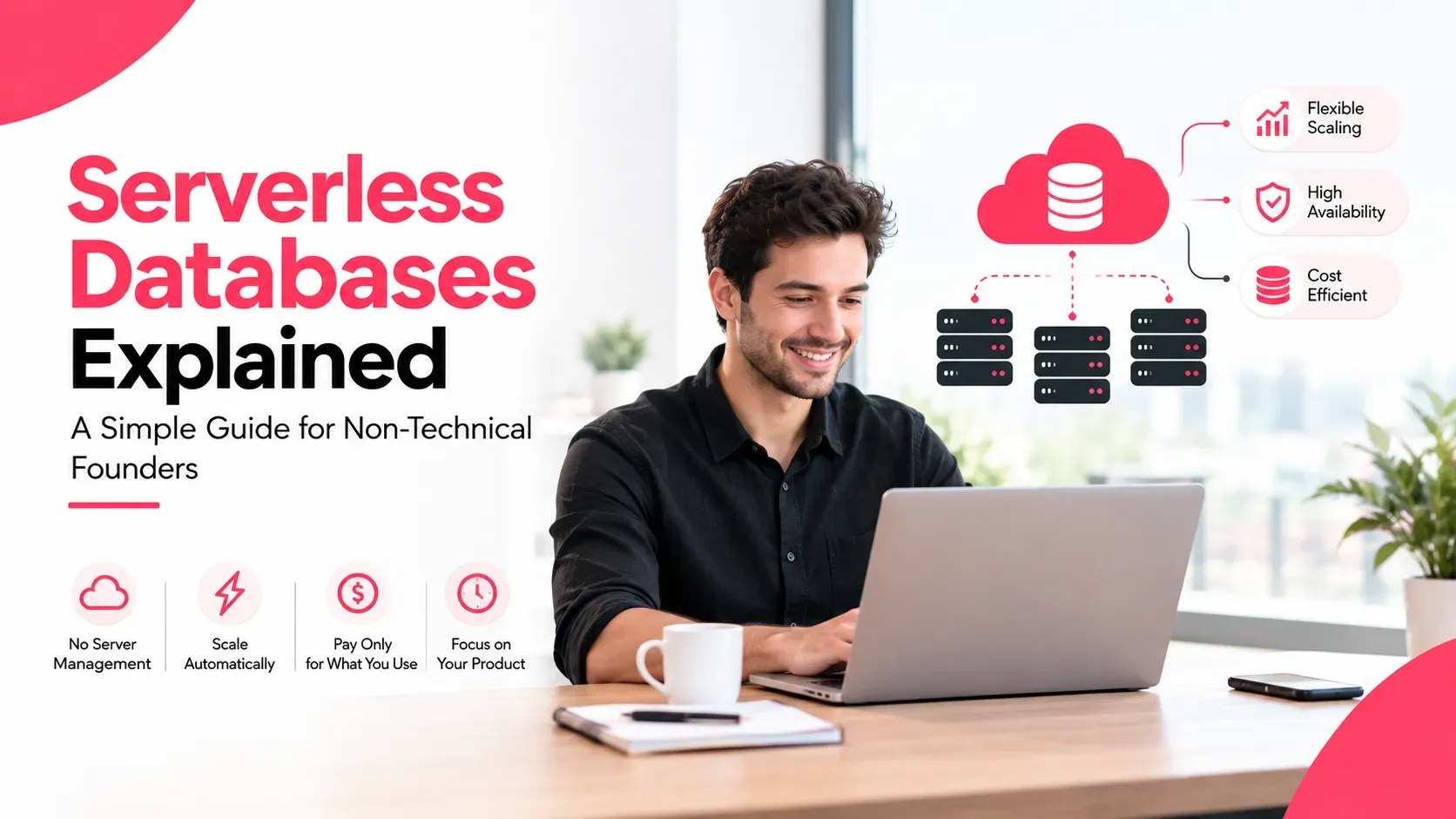
Your developer is walking you through the technical plan for your app. Everything makes sense until they say, "and we'll use a serverless database." You nod, make a note, and quietly wonder what you've just agreed to.
You're not alone. So, what is a serverless database, and should you care? This guide explains it in plain English, shows what it costs and where it can catch you out, and gives you seven questions to ask your developer before you sign off.
Quick Answer
A serverless database is a cloud database where the provider runs, scales, and maintains all the servers for you, and you pay for what your app actually uses rather than a fixed monthly server. It suits startups with unpredictable traffic, but it comes with trade-offs around surprise costs, slow "cold starts," and dependence on one provider.
Key Takeaways
- "Serverless" doesn't mean there are no servers; it means you don't manage them.
- You pay based on usage, so costs drop when your app is quiet and rise when it's busy.
- It's a strong fit for MVPs, launches, and apps with unpredictable or seasonal traffic.
- Steady, heavy traffic can be cheaper on a traditional database.
- Always ask about idle costs, spending caps, data location, and how hard it would be to switch later.
What Is a Serverless Database?
A serverless database is a cloud database that automatically adds or removes computing power based on how much your app is being used. The provider handles the servers, backups, updates, and scaling behind the scenes, and you're billed for actual usage rather than paying for a fixed-size server that runs around the clock.
A Simple Way to Picture It
A traditional database is like owning a car. You pay for it whether you drive or not, and you handle the servicing. A serverless database is like taking a taxi: no maintenance, no parking, and you pay per trip. Taxis are brilliant for irregular journeys, but if you drive the same long route every day, owning a car can work out cheaper.
How Does a Serverless Database Work?
Behind the scenes, the process looks like this:
- Your app sends requests. Every time a user signs up, places an order, or opens their profile, the app reads or writes data.
- Capacity scales up automatically. If thousands of users arrive at once, the provider adds computing power without anyone lifting a finger.
- Capacity scales down when things are quiet. Late at night, the database shrinks, and some can pause completely.
- You're billed for usage. Charges are based on things like requests, compute time, and storage.
- The provider handles maintenance. Backups, security patches, and hardware failures are their job, not yours.
Serverless vs Traditional Database: What's the Difference?
Factor | Traditional database | Serverless database |
|---|---|---|
Setup | You choose a server size upfront | No server size to choose |
Scaling | Manual, or planned in advance | Automatic |
Billing | Fixed monthly cost | Based on usage |
Cost when idle | You still pay for the server | Low, sometimes storage only |
Maintenance | Your team or developer | The provider |
Performance | Consistent | Can slow briefly after idle periods |
Team needed | Someone to manage the database | Fewer specialist skills required |
The biggest difference for a founder is predictability. A traditional database gives you a fixed bill; a serverless database gives you a bill that tracks your growth.
Common Serverless Database Examples
You'll probably hear one of these names in a technical proposal:
- Amazon DynamoDB: a fast, flexible AWS database, popular for apps that need to scale quickly.
- Amazon Aurora Serverless v2: a serverless version of the familiar MySQL and PostgreSQL databases.
- Azure Cosmos DB (serverless mode): Microsoft's option, billed per request.
- Google Cloud Firestore: common in mobile apps, especially those built with Firebase.
- Neon: a newer serverless PostgreSQL service popular with startups.
Some of these are "SQL" databases, which store data in structured tables a bit like a spreadsheet, and some are "NoSQL," which store data more flexibly. Your developer should choose based on the shape of your app's data, not on what's trendy.
One detail worth knowing: not every serverless database can shrink all the way to zero. AWS only added scale-to-zero to Aurora Serverless v2 in November 2024, letting it pause after a period of inactivity and resume when the next connection arrives. Always check how your chosen option behaves when idle.
Is a Serverless Database Right for Your Startup?
When It's a Good Fit
- Unpredictable traffic: a launch day, a viral post, or a spike during Dubai Shopping Festival or White Friday sales
- An MVP: you don't know how many users you'll have yet, so you don't want to guess a server size
- A small team: nobody on staff to manage and patch a database
- Quiet periods: apps used mainly at certain times of day, like booking or ordering apps
When It's a Poor Fit
- Steady, heavy traffic: if your app is busy all day, every day, a traditional database is often cheaper
- Every millisecond counts: a database waking from a pause can add a noticeable delay
- Complex existing systems: some older software expects a traditional database setup
If you're planning a new app, the database is one decision among many, and experienced mobile app development for startups in Dubai should weigh it alongside your budget, launch plans, and growth targets.
What Is a Serverless Database Going to Cost You?
There's no single price, because you pay for what you use. Typical charges include:
- Reads and writes: each time your app fetches or saves data
- Compute time: how long the database is actively working
- Storage: how much data you keep, charged even when the app is quiet
- Data transfer: moving data in or out of the provider's network
Picture two months for the same app. In a quiet testing month with a handful of users, the bill may be very small. In your launch month, with thousands of sign-ups and orders, it rises with the activity. That's the trade-off in one sentence: low costs while you're small, and costs that grow as you grow.
Apps with sharp daily peaks show this clearly. A delivery app, for example, might be quiet mid-afternoon and flooded at lunch and dinner, and our guide on what it takes to launch a food delivery app in the Middle East shows how those rushes shape technical decisions.
The key protection: ask your developer to set budget alerts and spending limits from day one, so a spike never turns into a shock.
Risks and Trade-offs to Understand
Cold Starts
A database that has paused needs a moment to wake up. Aurora Serverless v2, for instance, typically takes around 15 seconds to resume from zero. That's fine for an internal tool, but frustrating for a customer staring at a login screen.
Surprise Bills
Because costs follow usage, a bug that sends endless requests, or a sudden viral moment, can push costs up quickly.
Vendor Lock-in
Some serverless databases are specific to one cloud provider. Moving away later can mean rewriting parts of your app.
Data Location
If your customers are in the UAE, you may want their data stored here too. AWS has run a cloud region in the UAE since 2022, but not every service is available in every region, so confirm your chosen database is offered there.
None of these are deal-breakers; they simply need planning. Working with a team experienced in AWS cloud solutions for UAE businesses helps you set up regions, cost controls, and monitoring properly from the start.
7 Questions to Ask Your Developer Before Choosing a Serverless Database
- Does this database scale down to zero when nobody is using the app, and what does it cost when idle?
- What happens to performance and cost if traffic jumps tenfold overnight?
- How will we cap or monitor spending?
- Where will our data be stored, and can it stay in the UAE?
- How difficult would it be to move to a different database later?
- Will users notice cold starts, and how will we handle them?
- Who monitors the database and responds if something goes wrong?
Good answers show your developer has thought beyond the build. If you'd like a second opinion on a proposal, or want the setup handled properly from the start, specialist serverless database services in Dubai can review your plan or build it with you.
Frequently Asked Questions
Does "serverless" mean there are no servers?
No. The servers still exist; you just never see or manage them. The cloud provider runs them and adjusts capacity automatically.
Is a serverless database cheaper than a regular database?
Often, for apps with low or unpredictable traffic, because you're not paying for idle capacity. For apps with steady, heavy use, a traditional database can work out cheaper.
Is a serverless database secure?
Major providers offer strong security, including encryption and access controls. Security still depends on how your developer configures access, so ask how permissions and backups are set up.
Can I switch from a serverless database to a traditional one later?
Usually, yes, but the effort depends on the database. Options built on standard technology like PostgreSQL or MySQL are generally easier to move than provider-specific ones.
Can my data stay in the UAE with a serverless database?
In many cases, yes. Major cloud providers run regions in the UAE, but check that your specific database service is available in the region you need.
Final Thoughts
So, what is a serverless database in plain terms? It's a database you rent by usage instead of by the server, with the provider doing the heavy lifting. For many startups, that means lower early costs and one less thing to manage.
You don't need to become an engineer to make a good call. Understand the trade-offs, ask the seven questions, and make sure the answers fit your plans. If you'd like a partner who explains technology in plain language, Milaaj Brandset helps founders across the UAE build products on the right foundations.
Ready to Elevate Your Brand?
Start Your Project Today