August 3, 2026
AI Chatbot Marketing Strategies for Lead Generation
Milaaj Editorial / Research Insights
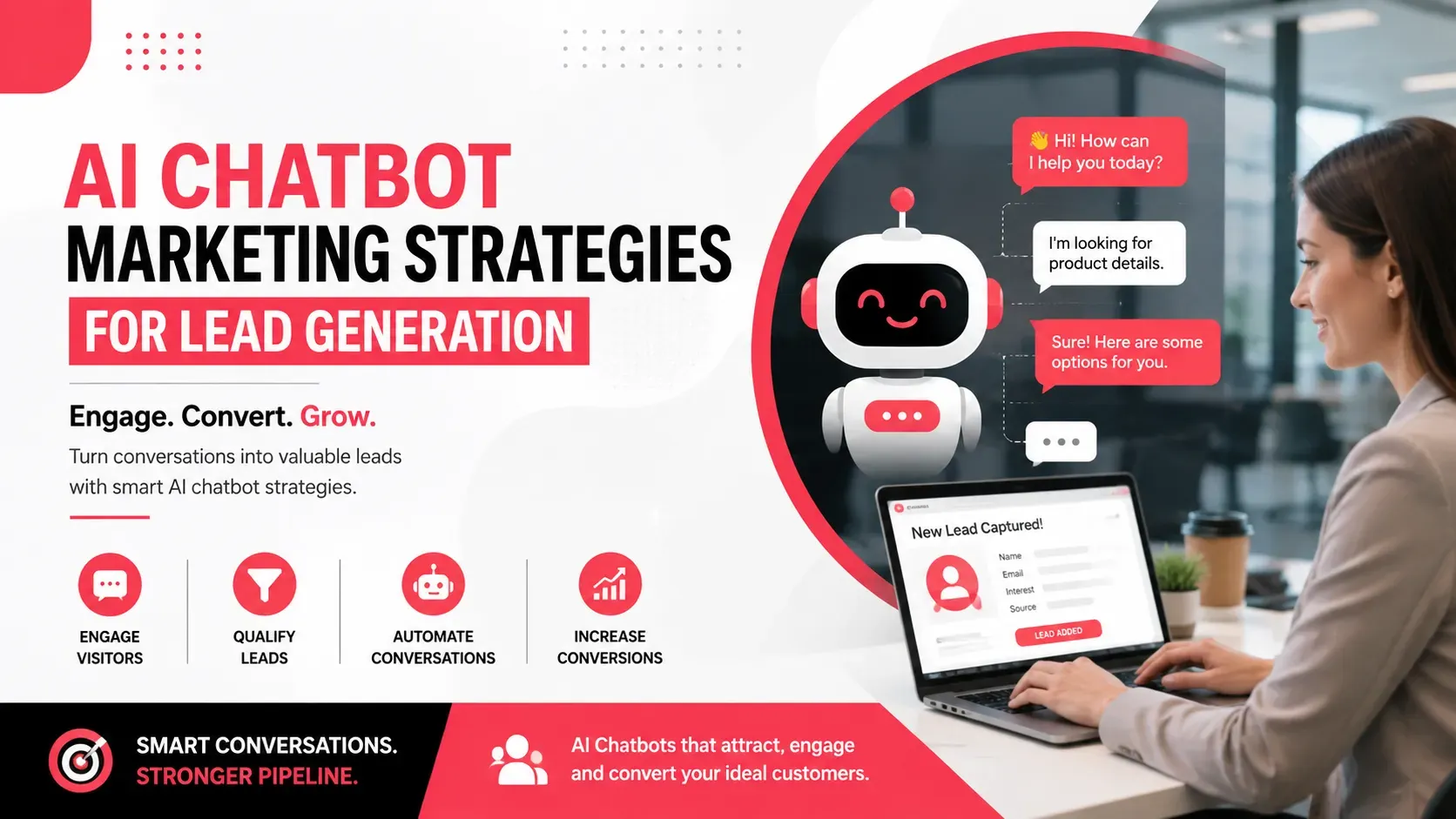
Businesses today face a common challenge; website visitors often leave without making an enquiry, booking a consultation, or requesting a quote. Even with effective SEO, paid advertising, and content marketing, converting visitors into qualified leads remains one of the biggest obstacles to sustainable growth.
AI-powered chatbots are transforming how businesses engage with potential customers. Instead of relying solely on static contact forms or delayed email responses, AI chatbots provide instant, personalized conversations that answer questions, qualify prospects, recommend solutions, and guide users toward taking action.
Modern conversational AI has evolved far beyond simple rule-based chatbots. Powered by advanced natural language processing (NLP) and machine learning, AI chatbots can understand customer intent, maintain contextual conversations, and provide relevant responses 24/7. When implemented strategically, they become an effective tool for improving lead generation while enhancing the overall customer experience.
This guide explores practical AI chatbot marketing strategies that help businesses generate more qualified leads and maximize website conversions.
Quick Answer
AI chatbot marketing uses conversational AI to engage website visitors, answer questions instantly, qualify leads, collect customer information, and guide prospects toward conversions. By integrating AI chatbots with CRM systems, marketing automation platforms, and customer support workflows, businesses can increase lead generation, improve response times, and deliver personalized customer experiences around the clock.
Why AI Chatbots Are Changing Lead Generation
Today's customers expect immediate answers.
Waiting several hours or even minutes for a response often results in lost opportunities, especially when competitors are only a click away.
AI chatbots address this challenge by providing:
- Instant responses
- Personalized conversations
- Continuous availability
- Automated lead qualification
- Faster customer support
- Guided purchasing decisions
Rather than replacing human sales teams, AI chatbots handle routine interactions, allowing staff to focus on qualified prospects and higher-value conversations.
Benefits of AI Chatbots for Businesses
Businesses across industries are using conversational AI to improve customer engagement and marketing performance.
Key benefits include:
24/7 Customer Engagement
Unlike human teams, AI chatbots remain available at all times, ensuring visitors receive immediate assistance regardless of business hours.
This continuous availability helps capture leads that might otherwise leave the website without making contact.
Faster Lead Qualification
Not every visitor is ready to become a customer.
AI chatbots can ask qualifying questions such as:
- Which service are you interested in?
- What is your budget?
- When do you plan to start?
- Which location are you based in?
Collecting this information early helps sales teams prioritize high-quality opportunities.
Improved Customer Experience
Visitors appreciate quick, accurate answers.
AI chatbots reduce frustration by helping users:
- Find information faster
- Navigate websites
- Discover relevant services
- Book appointments
- Request quotations
Businesses that combine conversational AI with Custom Web Development can create chatbot experiences tailored to their website, CRM, booking systems, and customer journey, resulting in smoother interactions and higher engagement.
Higher Conversion Rates
Quick responses reduce hesitation during the buying journey.
Instead of asking visitors to fill out lengthy contact forms, AI chatbots guide them through conversational interactions that naturally collect information while encouraging enquiries.
AI Chatbot Marketing Strategies That Generate More Leads
1. Welcome Visitors Proactively
The first few seconds often determine whether a visitor stays or leaves.
Instead of displaying a generic greeting, use contextual welcome messages based on:
- Landing page
- Traffic source
- Returning visitor status
- Location
- Time spent on page
For example:
"Looking for digital marketing solutions? I'd be happy to answer your questions or help you request a free consultation."
Relevant introductions feel more helpful than intrusive.
2. Automate Lead Qualification
One of the most valuable chatbot capabilities is qualifying leads before they reach your sales team.
Ask questions progressively rather than presenting a long form.
Examples include:
- What service are you looking for?
- What challenges are you trying to solve?
- How soon are you planning to begin?
- What's the best way to contact you?
This conversational approach often results in higher completion rates than traditional enquiry forms.
3. Recommend Relevant Services
AI chatbots can guide visitors toward services that best match their needs.
For example:
- Visitors looking to improve website performance may receive recommendations based on their goals.
- Existing customers can be guided toward complementary solutions.
Personalized recommendations improve user experience while increasing opportunities for conversion.
4. Capture Leads Before Visitors Leave
Exit-intent conversations can help recover potential customers before they abandon your website.
Examples include:
- Offering a free consultation
- Providing a downloadable resource
- Scheduling a discovery call
- Answering final questions
- Collecting contact information for follow-up
These interactions provide another opportunity to convert visitors who may otherwise leave without engaging.
5. Personalize Conversations Using Visitor Behaviour
Modern AI chatbots can adapt conversations based on user behaviour.
Personalization may include:
- Pages viewed
- Time spent on the website
- Previous chatbot interactions
- Returning visitor status
- Referral source
Context-aware conversations feel more natural and increase engagement compared to generic chatbot scripts.
6. Integrate With Your CRM
Lead generation becomes far more effective when chatbot conversations connect directly with your CRM.
Automatically storing:
- Contact information
- Conversation history
- Lead source
- Service interest
- Qualification details
helps sales teams continue conversations with full context instead of asking prospects to repeat information.
If you're looking for additional ways to improve conversions from your existing website visitors, read our guide on How to Increase Website Leads Without More Traffic, where we explore complementary strategies that work alongside AI-powered conversational marketing.
7. Automate Appointment and Consultation Bookings
Many potential customers leave a website simply because booking a meeting requires too many steps.
AI chatbots can simplify this process by allowing visitors to:
- Schedule consultations
- Book product demonstrations
- Reserve appointments
- Request callbacks
- Select preferred meeting times
Connecting chatbots with online scheduling tools reduces friction and helps businesses capture leads while interest is highest.
8. Nurture Leads Through Personalized Follow-Ups
Not every visitor is ready to make a purchasing decision immediately.
AI chatbots can continue the conversation by:
- Sending follow-up emails
- Sharing relevant resources
- Recommending additional services
- Reminding prospects about consultations
- Encouraging unfinished enquiries
These automated interactions help keep your business top of mind while moving prospects through the sales funnel.
9. Support Omnichannel Conversations
Today's customers interact with businesses across multiple platforms.
Modern AI chatbots can support conversations through:
- Business websites
- Facebook Messenger
- Instagram
- WhatsApp Business
- Live chat platforms
Maintaining consistent messaging across channels creates a smoother customer experience and helps businesses manage enquiries more efficiently.
10. Use AI Insights to Improve Marketing Campaigns
Beyond answering customer questions, AI chatbots generate valuable first-party data that can improve future marketing strategies.
Conversation insights may reveal:
- Frequently asked questions
- Common customer pain points
- Popular services
- Purchase intent
- Objections before conversion
- High-performing landing pages
These insights help businesses refine website content, advertising campaigns, FAQs, and lead generation strategies based on real customer interactions rather than assumptions.
Best Practices for AI Chatbot Lead Generation
A chatbot should enhance the customer experience, not interrupt it.
Follow these best practices:
- Keep conversations short and relevant.
- Use natural, conversational language.
- Offer clear options without overwhelming visitors.
- Allow users to speak with a human when needed.
- Ask only for essential information.
- Continuously review chatbot conversations to improve responses.
- Update chatbot knowledge as services and customer needs evolve.
Regular optimization helps maintain accuracy and improves lead quality over time.
Common AI Chatbot Mistakes
Many chatbot implementations fail because they prioritize automation over customer experience.
Mistake | Better Approach |
|---|---|
Using generic welcome messages | Personalize greetings based on visitor intent and page context. |
Asking too many questions immediately | Collect information gradually through natural conversations. |
Hiding human support | Always provide an option to speak with a team member. |
Providing inaccurate responses | Regularly review and update chatbot knowledge. |
Ignoring chatbot analytics | Analyze conversations to improve marketing and customer support. |
Treating every visitor the same | Personalize responses using visitor behaviour and preferences. |
Avoiding these mistakes creates a more engaging conversational experience and increases the likelihood of generating qualified leads.
Measure Chatbot Performance
Like every marketing initiative, AI chatbot performance should be measured regularly.
Important metrics include:
Metric | Why It Matters |
|---|---|
Conversation Start Rate | Measures visitor engagement with the chatbot. |
Lead Capture Rate | Indicates how effectively conversations generate leads. |
Lead Qualification Rate | Shows how many conversations produce qualified prospects. |
Appointment Booking Rate | Measures consultation and meeting conversions. |
Customer Satisfaction (CSAT) | Evaluates the overall chatbot experience. |
Human Escalation Rate | Indicates when conversations require human assistance. |
Reviewing these KPIs helps businesses identify opportunities to improve chatbot performance and increase lead generation.
The Future of AI Chatbot Marketing
Conversational AI continues to evolve rapidly.
Emerging capabilities include:
- More human-like conversations
- Multilingual customer support
- Voice-enabled AI assistants
- Predictive customer recommendations
- Deeper CRM integration
- Advanced personalization using first-party data
Businesses that adopt AI responsibly while maintaining transparency and human oversight will be well positioned to deliver better customer experiences and remain competitive as expectations continue to evolve.
Key Takeaways
- AI chatbots provide instant, 24/7 engagement that helps convert more website visitors into qualified leads.
- Personalized conversations and automated lead qualification improve sales efficiency.
- CRM integration ensures valuable customer information is captured and shared with sales teams.
- AI-generated conversation insights can strengthen marketing campaigns and website content.
- Regular optimization and performance monitoring improve chatbot effectiveness over time.
- The best chatbot experiences combine automation with easy access to human support.
Turn Conversations Into Qualified Leads
AI chatbots have become an important part of modern lead generation by helping businesses engage visitors, answer questions instantly, and guide prospects toward meaningful actions. Rather than replacing human interaction, conversational AI supports sales and marketing teams by handling routine enquiries, qualifying leads, and providing personalized assistance throughout the customer journey.
When implemented strategically, AI chatbots not only improve response times but also enhance customer experience, increase conversion opportunities, and provide valuable insights that strengthen future marketing campaigns.
Milaaj Brandset helps businesses implement intelligent digital marketing solutions, custom AI experiences, and conversion-focused websites that generate higher-quality leads while delivering exceptional customer experiences.
FAQs
What is an AI chatbot for lead generation?
An AI chatbot is a conversational tool that interacts with website visitors, answers questions, collects contact information, qualifies prospects, and guides users toward actions such as booking consultations or requesting quotes.
Can AI chatbots replace human sales teams?
No. AI chatbots are designed to support sales teams by handling routine conversations and qualifying leads. Complex enquiries and relationship-building activities still benefit from human expertise.
Which businesses benefit most from AI chatbots?
Service providers, ecommerce businesses, healthcare organizations, educational institutions, real estate companies, financial services, and SaaS businesses can all use AI chatbots to improve customer engagement and lead generation.
How do AI chatbots improve conversion rates?
They provide instant responses, reduce waiting times, personalize conversations, simplify lead capture, and help visitors find the information they need before leaving the website.
Should AI chatbots integrate with CRM systems?
Yes. CRM integration automatically stores conversation history, lead details, and customer information, making follow-up more efficient and improving sales productivity.
How can I measure chatbot success?
Track conversation start rate, lead capture rate, qualified leads, appointment bookings, customer satisfaction, and conversion rates to evaluate overall chatbot performance.
Ready to Elevate Your Brand?
Start Your Project Today