July 20, 2026
Difference Between Local SEO and Traditional SEO
Milaaj Editorial / Research Insights
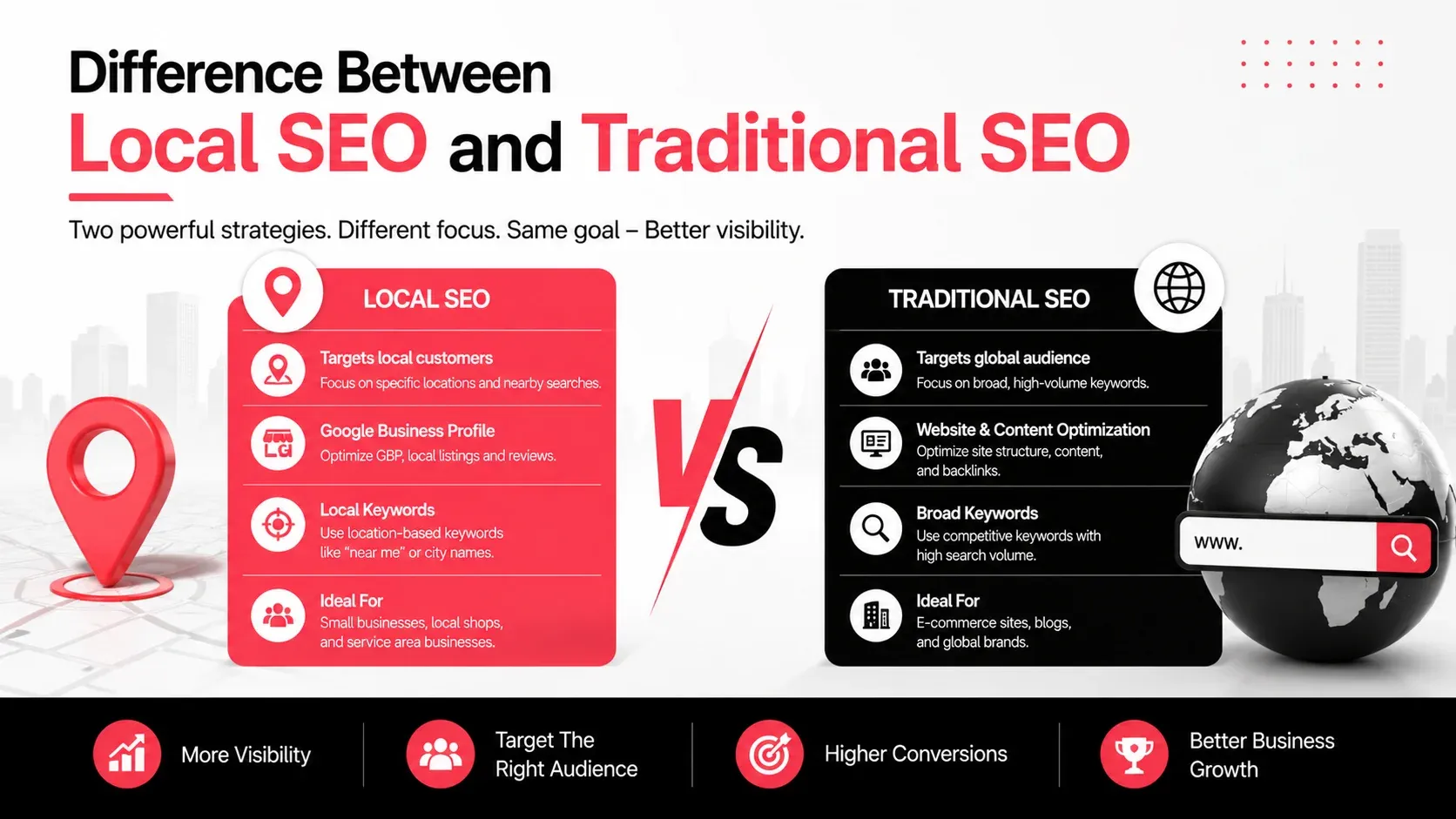
Search engine optimization (SEO) helps businesses improve their visibility in search results, but not every SEO strategy has the same objective. Some businesses need to attract customers within a specific geographic area, while others want to reach audiences across an entire country or even globally. This difference is where local SEO and traditional SEO serve distinct purposes.
Although both strategies share common SEO principles, they differ in the audiences they target, the ranking signals they prioritize, and the types of searches they aim to capture. Understanding these differences helps businesses invest in the right strategy based on their goals and customer base.
In this guide, we'll compare local SEO and traditional SEO, explain how each works, and help you determine which approach is best for your business.
Quick Answer
Local SEO focuses on improving visibility for location-based searches, helping businesses attract nearby customers through Google Search and Google Maps. Traditional SEO targets broader organic search results by optimizing content, website authority, and technical performance to reach regional, national, or global audiences.
What Is Local SEO?
Local SEO is the process of optimizing your online presence to appear in search results for location-specific queries.
Examples include:
- Dentist near me
- Coffee shop in my area
- Emergency plumber
- Best bakery nearby
These searches indicate that users are looking for businesses within a particular location.
Local SEO aims to improve visibility in:
- Google Business Profile listings
- Google Maps
- Local search results
- Local business directories
It is particularly valuable for businesses that serve customers within defined geographic areas.
What Is Traditional SEO?
Traditional SEO focuses on improving rankings in standard organic search results without relying on location as the primary ranking factor.
Examples include:
- How to improve website speed
- Best CRM software
- Email marketing guide
- Content marketing strategy
The objective is to attract users searching for information, products, or services regardless of where they're located.
Traditional SEO typically emphasizes:
- High-quality content
- Keyword optimization
- Website authority
- Technical SEO
- Internal linking
- Backlink development
Businesses that operate nationally or internationally often prioritize traditional SEO.
Local SEO vs Traditional SEO: Key Differences
Although both strategies improve search visibility, they target different types of searches and use different ranking signals.
Factor | Local SEO | Traditional SEO |
|---|---|---|
Audience | Nearby customers | Regional, national, or global audiences |
Search Intent | Location-specific searches | General informational or commercial searches |
Ranking Focus | Local Pack and Google Maps | Organic search results |
Key Signals | Google Business Profile, reviews, local citations | Content quality, backlinks, technical SEO |
Best For | Businesses serving specific areas | Businesses targeting broader markets |
Understanding these differences helps businesses choose the strategy that aligns with their objectives.
Target Audience
The most significant difference between local SEO and traditional SEO is the audience.
Local SEO
Local SEO targets customers who are physically close to a business or searching within a particular area.
Examples include:
- Restaurants
- Medical clinics
- Law firms
- Home service providers
- Retail stores
These businesses depend on attracting customers from nearby locations.
Traditional SEO
Traditional SEO targets audiences based on interests rather than location.
Examples include:
- SaaS companies
- Online retailers
- Educational platforms
- Software providers
- Digital publishers
Their customers may come from anywhere, making geographic proximity less important.
Search Intent
User intent also differs significantly between these SEO approaches.
Someone searching:
is ready to find a nearby business.
Someone searching:
is likely researching before making a decision.
Local SEO focuses on searches with clear geographic intent, while traditional SEO addresses informational, commercial, and transactional queries that aren't tied to a specific location.
Ranking Factors
While many SEO fundamentals overlap, each strategy prioritizes different ranking signals.
Local SEO Prioritizes
- Google Business Profile optimization
- Customer reviews
- Business citations
- Location relevance
- Local backlinks
- Consistent business information
Businesses investing in local search optimization strengthen their visibility for customers searching within the areas they serve.
Traditional SEO Prioritizes
- Comprehensive content
- Keyword relevance
- Website authority
- Backlink profile
- Technical website performance
- Internal linking
These factors help websites compete across broader search markets rather than within a specific geographic area.
Content Strategy
Content also differs depending on the SEO strategy.
Local SEO content often includes:
- Location pages
- Local service pages
- Community-focused blog posts
- Area-specific FAQs
Traditional SEO content focuses more on:
- Educational guides
- Industry insights
- Comparison articles
- Evergreen resources
- Product-focused content
Although the formats may differ, both approaches should prioritize useful, high-quality information that satisfies search intent.
Competition Differs Significantly
The level of competition often depends on the audience you're trying to reach.
With local SEO, you're typically competing against businesses within your service area. A local dental clinic, for example, is primarily competing with other nearby clinics rather than practices in other cities or countries.
With traditional SEO, the competition is usually much broader. A blog about email marketing or a software company may compete with websites from around the world for the same keywords.
As a result, traditional SEO often requires a stronger long-term investment in content quality, website authority, and backlink acquisition.
Measuring Success
Although both strategies aim to improve visibility, they use slightly different performance indicators.
Local SEO Success Metrics
- Google Business Profile interactions
- Calls from local search
- Direction requests
- Local keyword rankings
- Google Maps visibility
- Customer reviews
Traditional SEO Success Metrics
- Organic traffic
- Keyword rankings
- Click-through rate
- Engagement time
- Lead generation
- Conversion rate
Choosing the right metrics ensures you're evaluating performance based on your actual business goals.
Which SEO Strategy Does Your Business Need?
The right strategy depends on how and where you serve your customers.
Choose local SEO if you:
- Operate from a physical location.
- Serve customers within specific cities or regions.
- Depend on local enquiries or walk-in traffic.
- Offer location-based services.
Choose traditional SEO if you:
- Sell products or services online across multiple regions.
- Target a national or international audience.
- Publish educational or industry-focused content.
- Don't rely on customers being in a specific location.
Aligning your SEO strategy with your business model helps you invest in the areas most likely to deliver meaningful results.
Can Businesses Use Both?
Yes. Many businesses benefit from combining local and traditional SEO.
For example, a legal firm with offices in multiple cities may:
- Optimize location pages to attract local clients.
- Publish educational articles that rank nationally.
- Build authority through comprehensive industry content.
- Maintain a well-optimized Google Business Profile for each office.
This combination allows businesses to capture both location-based searches and broader organic traffic.
If your business is expanding into multiple service areas, Local SEO Checklist for Multi-Location Businesses explains practical strategies for maintaining consistent local visibility across different locations.
Common Misconceptions
Businesses often misunderstand how these two SEO approaches work together.
Misconception | Reality |
|---|---|
Local SEO replaces traditional SEO. | Local SEO complements traditional SEO rather than replacing it. |
Only retail stores need local SEO. | Any business serving a defined geographic area can benefit from local SEO. |
Traditional SEO ignores location completely. | Some businesses naturally combine broader content with location-focused pages. |
Ranking nationally guarantees local visibility. | Strong organic rankings don't automatically improve Google Maps or Local Pack performance. |
You must choose only one strategy. | Many businesses achieve the best results by using both where appropriate. |
Understanding these differences helps create a more balanced and effective SEO strategy.
Key Takeaways
- Local SEO targets customers searching within specific geographic areas.
- Traditional SEO focuses on broader organic visibility without location being the primary ranking factor.
- Each strategy uses different ranking signals and content approaches.
- Local businesses often benefit from Google Business Profile optimization and local citations.
- Traditional SEO emphasizes content quality, authority, and technical performance.
- Many businesses achieve the strongest results by combining both strategies.
Choose the SEO Strategy That Matches Your Business Goals
Local SEO and traditional SEO share the same objective of improving search visibility, but they solve different business challenges. Understanding the difference allows you to invest your time and resources where they'll have the greatest impact.
For businesses serving local communities, location-focused optimization can generate valuable enquiries from nearby customers. Businesses targeting broader audiences should prioritize comprehensive content, technical excellence, and long-term authority. In many cases, combining both approaches creates the strongest foundation for sustainable organic growth.
Milaaj Brandset helps businesses develop tailored SEO strategies that align with their target audience, business objectives, and long-term digital growth plans.
FAQs
What is the main difference between local SEO and traditional SEO?
Local SEO focuses on improving visibility for location-based searches and Google Maps results, while traditional SEO targets broader organic search rankings for informational, commercial, and transactional queries.
Who should use local SEO?
Businesses that serve customers within a specific geographic area, such as restaurants, clinics, retail stores, and home service providers, typically benefit the most from local SEO.
Who should use traditional SEO?
Businesses targeting regional, national, or international audiences, including SaaS companies, ecommerce stores, publishers, and online service providers, generally rely more on traditional SEO.
Can a business use both local SEO and traditional SEO?
Yes. Many businesses combine both strategies by optimizing location-specific pages while also creating broader educational content that attracts a wider audience.
Does local SEO help with Google Maps rankings?
Yes. Google Business Profile optimization, customer reviews, business citations, and local relevance all contribute to stronger visibility in Google Maps and the Local Pack.
Which SEO strategy is better?
Neither is universally better. The right choice depends on your business model, target audience, and the locations where you offer products or services.
Ready to Elevate Your Brand?
Start Your Project Today