September 17, 2026
What Is a Headless CMS and Why Are Dubai Businesses Switching?
Milaaj Editorial / Research Insights
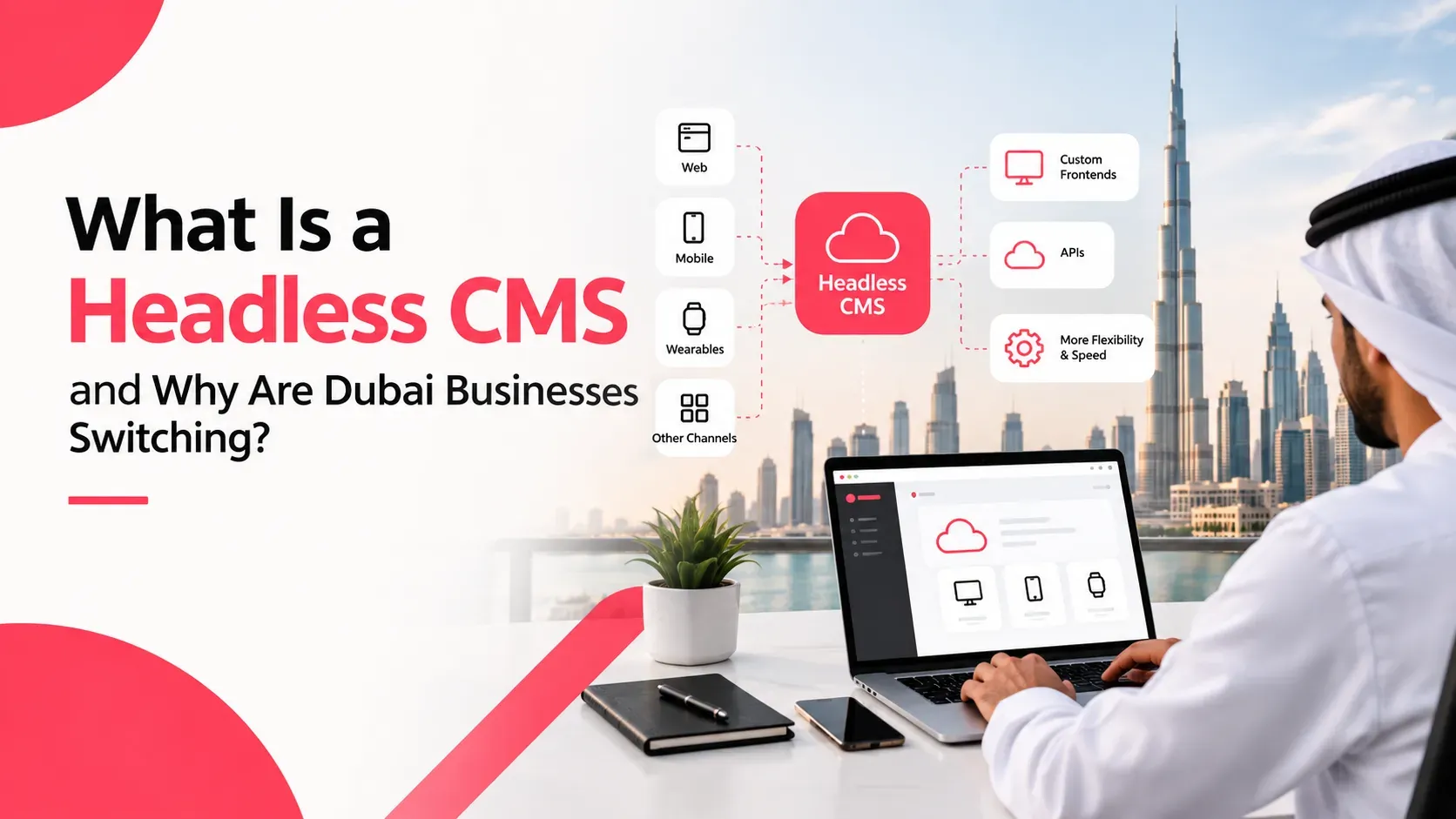
Your developer just told you that your next website should be built on a "headless CMS," and you nodded along without really knowing what that means for your business, your budget, or your team's day-to-day work.
You're not alone. This is one of those terms that's thrown around constantly in web development circles, while the actual explanation rarely makes it past the jargon.
Here's the plain-English version, along with why so many Dubai businesses are making the switch right now.
Quick Answer
A headless CMS is a content management system that separates content storage from how that content is displayed, unlike a traditional CMS where the two are locked together. This gives businesses the freedom to deliver the same content to a website, mobile app, or any other screen, with far more design flexibility and faster load times than older, all-in-one platforms.
Key Takeaways
- A headless CMS stores your content separately from how it's displayed, connected through APIs instead of a fixed template system.
- This separation gives you far more design freedom and typically faster site performance than a traditional CMS.
- Dubai businesses are switching mainly for speed, flexibility across devices, and future-proofing against platform limitations.
- It's not automatically the right choice. A headless CMS usually needs developer support for ongoing changes, which isn't ideal for every business.
- The switch is a genuine project, not a simple plugin install, so it needs proper planning before committing.
What Is a Headless CMS?
A headless CMS is a content management system that stores and organizes your content, but has no built-in way to display it. As Contentful describes it, a headless CMS separates the presentation layer, where content is shown, from the backend, where content is managed.
Instead, that content gets delivered wherever it's needed, your website, a mobile app, a smart display, anything, through an API. Think of it as a content warehouse. It stores everything neatly, but it doesn't decide how anything looks on the shelf. That job belongs to whatever "head" (the frontend) you connect to it.
Headless CMS vs Traditional CMS: What's the Real Difference?
A traditional CMS bundles content management and content display into one system, with the design tied directly to the platform. A headless CMS separates those two layers entirely, storing content in a backend that can feed any frontend through an API, which gives businesses far more flexibility in how and where their content appears.
Content Delivery
A traditional CMS (think a typical WordPress setup) is built to deliver content to one place: your website, using its own themes and templates. A headless CMS delivers raw content through an API, so the same piece of content can power your website, app, or any other digital touchpoint without being rebuilt each time.
Flexibility and Design Freedom
Traditional CMS platforms often limit you to their theme system and plugin ecosystem. With a headless CMS, developers can build the frontend using whatever framework fits the project best, without being boxed in by the CMS's own design rules.
Speed and Performance
Because headless setups typically render content through modern frontend frameworks rather than server-heavy templating, they often load noticeably faster. This matters more than it sounds like it should. As web.dev's own research shows, businesses that improved their Core Web Vitals scores saw measurable increases in both conversion rate and revenue per visitor.
Developer and Content Team Workflow
Traditional CMS platforms are generally easier for non-technical teams to manage independently, since design and content live in one place. Headless CMS platforms usually need a developer involved for structural or design changes, though content editors can still update text and media freely once the setup is built.
Why Are Dubai Businesses Switching to Headless CMS?
A few specific pressures are pushing this shift locally.
- Multi-channel content needs. Many Dubai businesses now need the same content across a website, a mobile app, and sometimes a kiosk or digital display, and a headless setup makes that far easier to manage from one place.
- Speed expectations. UAE consumers browse heavily on mobile, and a slow-loading site costs conversions fast. Headless architecture tends to perform better under that pressure.
- Scalability for growth. As businesses expand across the UAE and add new digital touchpoints, a headless CMS avoids the rebuild that a traditional platform often forces.
- Freedom from platform lock-in. Businesses that outgrew rigid, all-in-one platforms want the flexibility to redesign their frontend without migrating their entire content library.
Popular Headless CMS Platforms to Consider
There isn't one universal "best" headless CMS. The right one depends on your team's technical comfort, content structure, and budget.
- Contentful: Enterprise-friendly, highly scalable, strong for larger content teams.
- Sanity: Developer-favored, highly customizable content modeling, real-time collaboration.
- Strapi: Open-source and self-hostable, popular for businesses wanting more control over infrastructure.
- Payload CMS: Code-first, TypeScript-native, increasingly popular for custom builds.
Most of these pair naturally with modern frontend frameworks. If your team is already exploring a rebuild, it's worth reading about how Next.js development commonly pairs with headless platforms to deliver both speed and flexibility together.
Is a Headless CMS Right for Your Business?
A headless CMS tends to make sense when:
- You need to publish the same content across multiple platforms or devices.
- Site speed and Core Web Vitals scores matter directly to your business (e-commerce, lead generation).
- You have access to ongoing developer support, either in-house or through an agency.
- Your current platform feels restrictive every time you want to try something design-wise.
It's usually the wrong move if you're a small business with simple, single-website needs and no ongoing budget for developer support, since a traditional CMS will likely serve you just as well for less complexity. If you're weighing this against your other CMS options generally, it's worth reading through a broader comparison of the best CMS platforms for UAE business websites before deciding headless is definitely the right category for you.
What Does Switching to a Headless CMS Actually Involve?
Moving from a traditional CMS to headless isn't a plugin toggle. It's a genuine rebuild.
- Audit your current content structure and identify what needs to migrate.
- Choose a headless CMS platform that fits your content model and team's technical comfort.
- Design and build a new frontend, since headless platforms don't come with one built in.
- Migrate content carefully, testing formatting and media across every page type.
- Plan for ongoing developer involvement for future structural or design changes.
Because this touches both your content strategy and your frontend build at the same time, it's genuinely easier with a team that handles both sides together. CMS development services in Dubai covers exactly this kind of project, from choosing the right platform to building the frontend that connects to it.
Frequently Asked Questions
What does "headless" mean in headless CMS?
"Headless" refers to the system having no built-in frontend, or "head." The CMS manages and stores content, but doesn't dictate how or where that content is displayed, unlike a traditional CMS that handles both.
Is a headless CMS better than WordPress?
It depends on your needs. Standard WordPress is easier to manage without developer support and works well for simple websites. A headless CMS offers more flexibility and often better performance, but usually requires ongoing developer involvement.
Do small businesses need a headless CMS?
Most small businesses with a single, simple website don't need one. Headless CMS platforms make more sense once you're managing content across multiple channels or your current platform is genuinely holding back your design or performance.
Is switching to a headless CMS expensive?
It's typically a bigger upfront investment than a standard CMS setup, since it involves building a custom frontend rather than using pre-made themes. The cost usually pays off through better performance and flexibility over time, particularly for growing or multi-channel businesses.
What are the downsides of a headless CMS?
The main downsides are the need for ongoing developer support for structural changes, a steeper initial setup, and the fact that content editors lose the built-in visual editing experience many traditional CMS platforms offer.
Final Thoughts
A headless CMS isn't a trend for the sake of being trendy. It's a genuine architectural shift that solves real problems around speed, flexibility, and multi-channel content, and for the right business, that shift is worth the extra setup effort.
The key is being honest about whether your business actually needs that flexibility right now, or whether it's solving a problem you don't have yet. That's exactly the kind of assessment Milaaj Brandset helps Dubai businesses work through before committing to a rebuild.
If your current website already feels like it's fighting you at every turn, that's usually the clearest sign it's time to have this conversation properly.
Ready to Elevate Your Brand?
Start Your Project Today